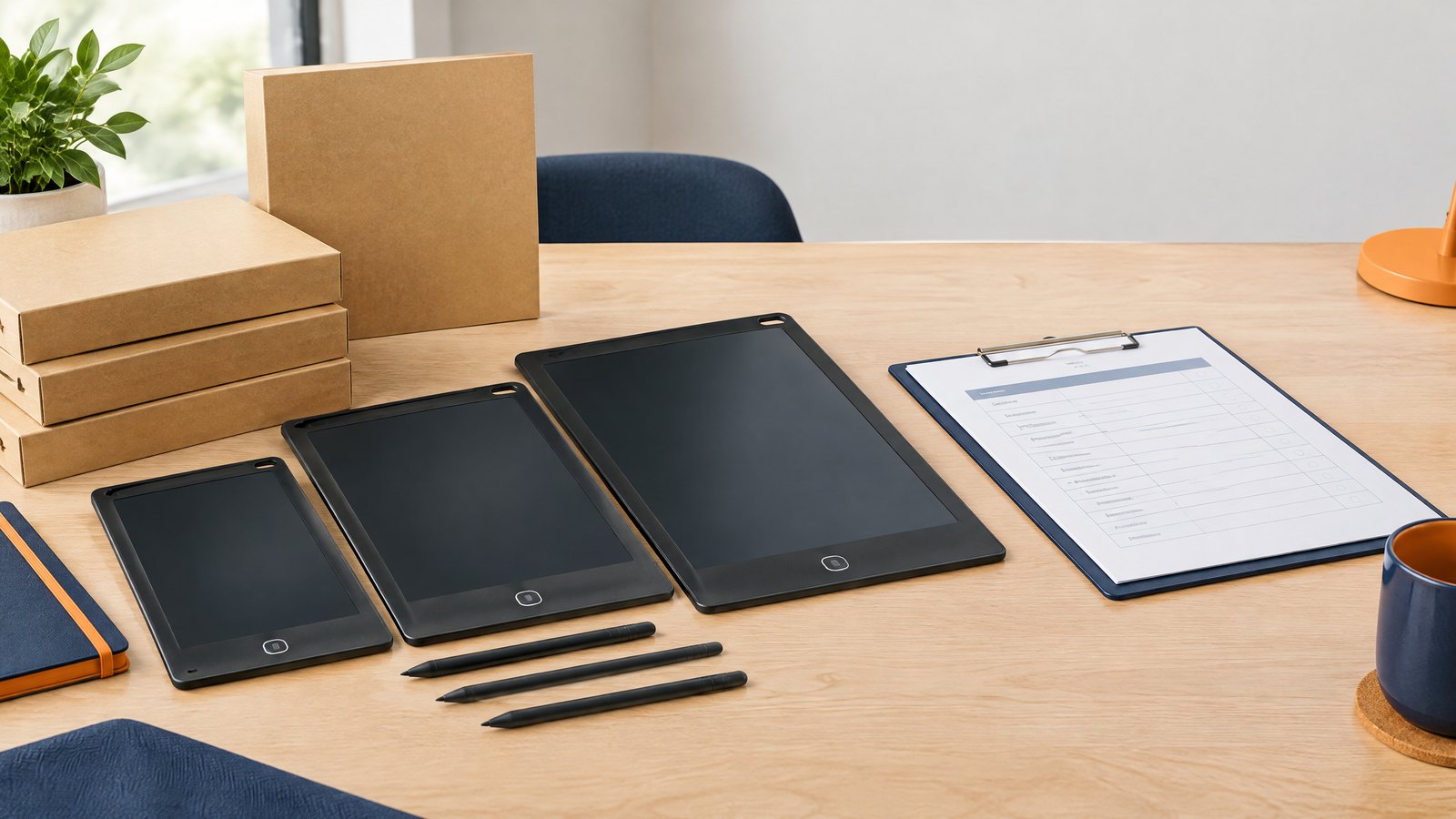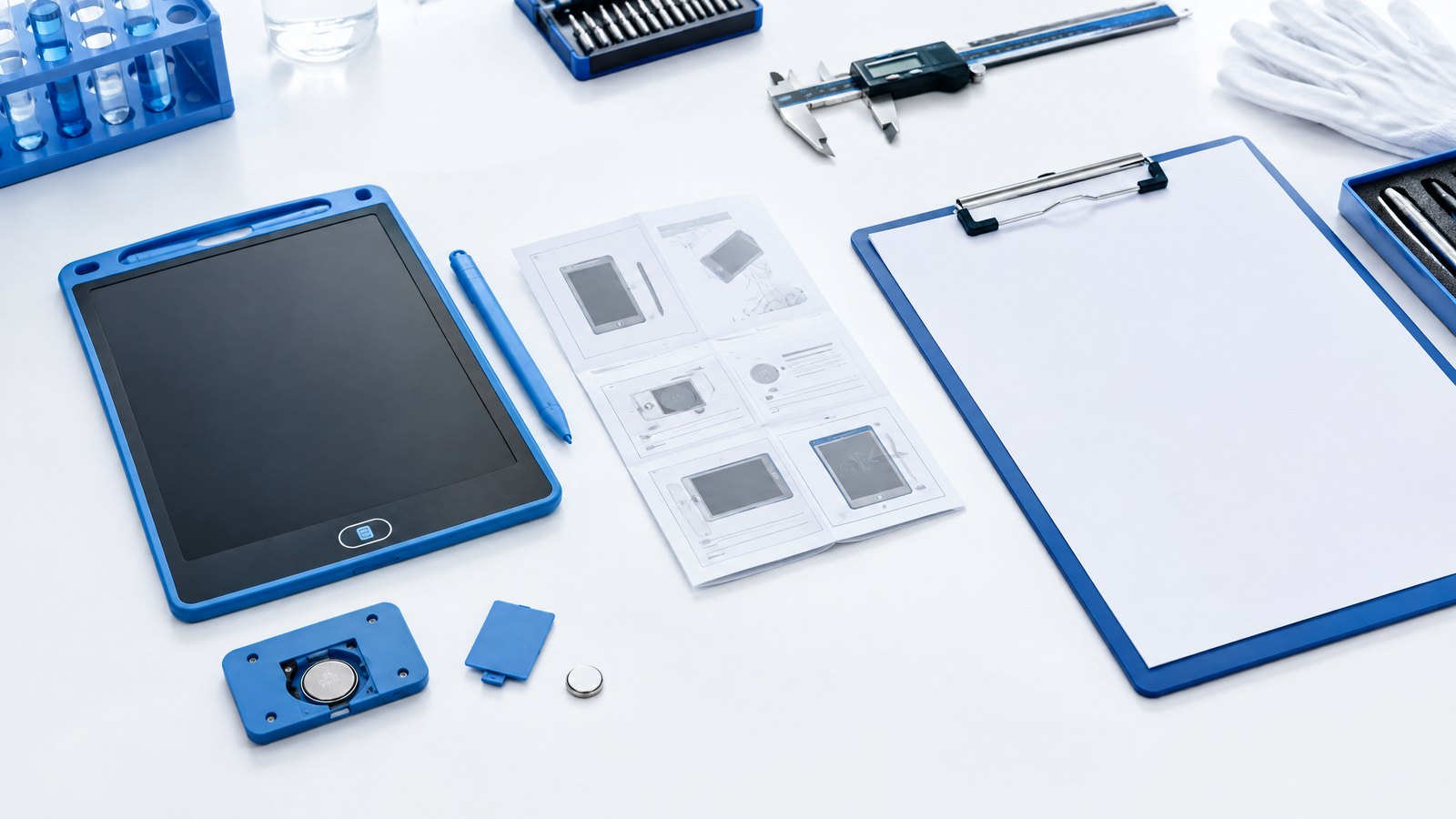

This guide provides a practical B2B decision framework. Final specifications, market obligations, testing scope, labels, packaging and shipment requirements must be confirmed for the exact finished SKU and destination.
Introduction
Direct answer: Request an LCD writing tablet sample with a clear product application, target market, model/size direction, screen and power preferences, stylus, packaging, customization, quantity range, and questions to test. A sample is useful when it answers a buying decision—not when it is ordered only to confirm that a generic board exists.
The best first sample request makes unknowns visible. A buyer may know the end use but not the ideal screen size, panel style, card fit, pack format, or accessory. State these as open decisions and ask the supplier to identify which options affect price, MOQ, timing, inspection, or market preparation.
1. Send a focused sample brief
Include:
- intended user and product application;
- destination market and proposed channel;
- preferred size and active-area question;
- screen/color direction and normal lighting condition;
- erase/lock and battery/charging preference;
- stylus, card, stand, pouch, or accessory needs;
- logo/color/packaging scope;
- estimated first-order quantity and target timing;
- exact questions the sample must answer.
For a complete quotation structure, use the RFQ guide. The sample request can be shorter, but it should not contradict the later purchase brief.
2. Test a real task, not only appearance
Direct answer: Use the sample in the way the end user will use it. Write the actual note, activity, tracing card, counter message, or giveaway insert. Check screen visibility under relevant light, erase/lock behavior, stylus fit, pack contents, and handling.
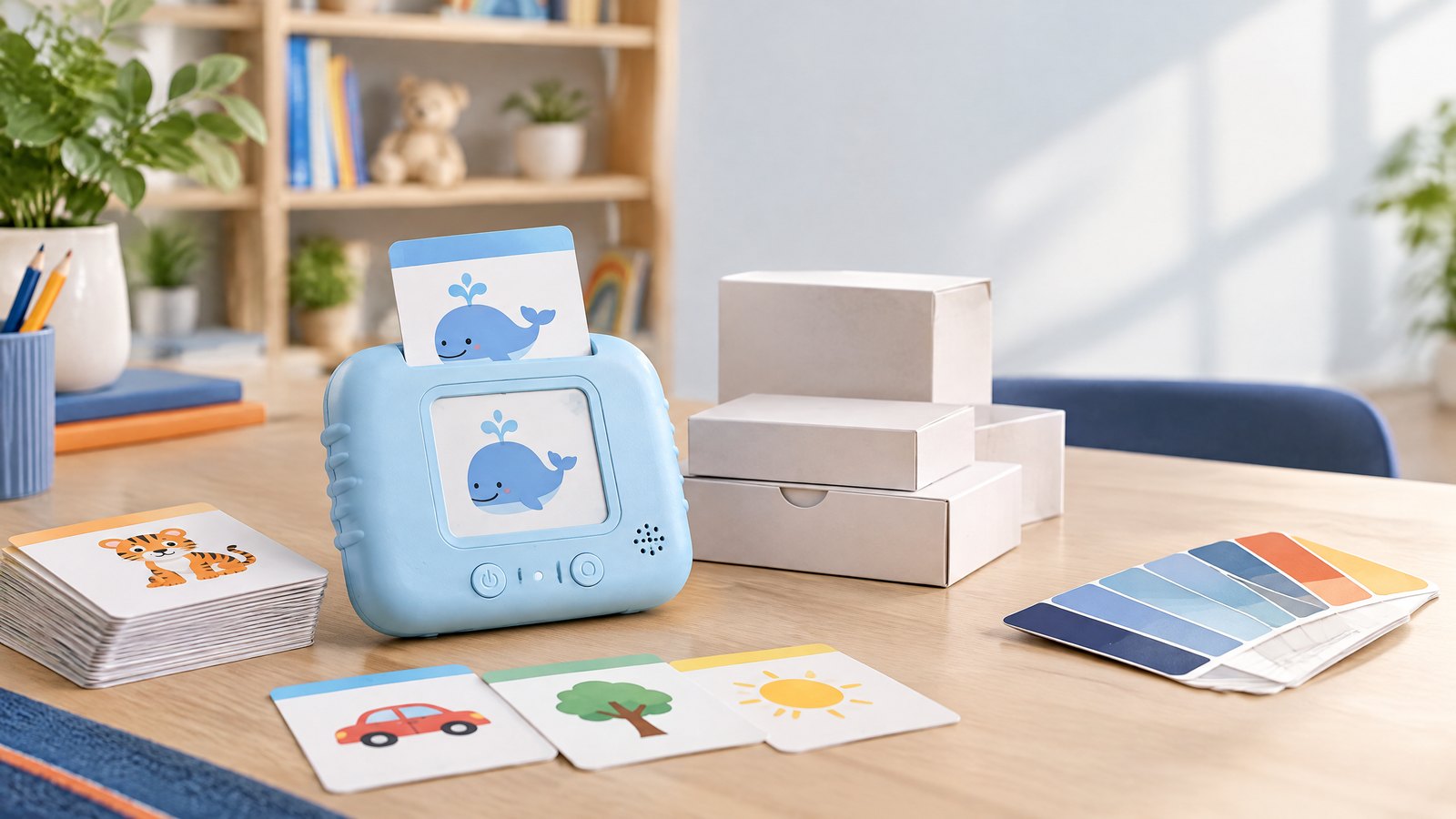
If the buyer is considering a transparent or activity-card product, test the approved card size and alignment. If the item will be carried, put it in the intended pouch or gift pack. If it will sit on a desk, test the planned holder. Record feedback with photos and specific requested changes.
Mid-article CTA
Ready to request a focused LCD writing tablet sample? Send your requirements with your use case, market, size, features, accessories, packaging, estimated quantity, and approval questions.
3. Use a sample checklist
Check model identity, dimensions, active area, screen appearance, writing response, erase/lock operation, stylus, frame/finish, power arrangement, accessories, logo/colour, instructions, individual pack, and master-carton assumptions. Do not approve an item only because the first impression is good.
Separate feedback into must-change, preferred change, and open question. Ask the supplier to confirm the next sample or quotation assumptions in writing. A controlled response becomes the bridge to a production-intent approval later.
4. Know when a first sample is not enough
A stock sample may show platform suitability, but a later production-intent sample may still be needed after logo, color, packaging, card, accessory, or market changes. Treat the final approved configuration as a controlled golden sample before bulk release. See the golden-sample guide.
5. Carry the sample findings into factory testing and shipment inspection
Use the final approval notes to define product function, cosmetic reference, accessory count, pack revision, labels, and carton details for factory testing and shipment inspection. A first sample is not a substitute for checking finished production, but it gives the buyer a better standard to specify.
FAQ
What should I ask for in an LCD writing tablet sample?
Ask for the model that best matches your intended use and request the product, stylus, relevant accessories, packaging information, dimensions, power details, and a written list of assumptions.
Can I request custom packaging with a sample?
You can discuss it, but a stock sample may not represent custom packaging. Ask which elements can be reviewed now and which require a production-intent pack sample.
What should I test first?
Test the actual user task, screen visibility, writing/erase/lock controls, stylus and accessory fit, handling, pack content, and any requirement unique to your channel.
When can bulk production begin?
After the final configuration, sample/approval status, artwork, pack, market preparation, quantity, inspection plan, and commercial terms are sufficiently controlled for the order.
Conclusion
A sample request is an early decision tool. Give the supplier enough context to recommend a relevant model, test it in the real product application, record specific feedback, and use the result to create a more controlled production-intent approval. This reduces the chance that a bulk order begins with assumptions rather than evidence.
Final CTA
Ask for an LCD writing tablet sample plan. Include your user application, market, size, screen direction, accessories, packaging, quantity range, and key approval questions.
Turn this sourcing plan into a product brief.
Share your target market, product requirements, packaging preference and estimated volume for a practical OEM / ODM discussion.