This guide provides a practical B2B decision framework. Final specifications, market obligations, testing scope, labels, packaging and shipment requirements must be confirmed for the exact finished SKU and destination.
2. Direct-Answer Introduction
To choose the right LCD writing tablet for wholesale, start with the end user and sales channel, then lock the specification, safety/compliance route, sample approval, packaging, and inspection plan before approving mass production. Retail buyers usually need a clear price ladder and durable shelf presentation. School programs need age-appropriate usability, easy asset control, and repeatable support. Promotional buyers may prioritize branding, slimness, and a controlled unit cost. Do not select only by screen size or quotation: compare the complete delivered offer, including stylus retention, erase behavior, battery design, artwork, labels, test documentation, cartons, and defect criteria. The best model is the one whose final, documented configuration fits the destination market and use case—not simply the lowest-priced sample.
An LCD writing tablet is a reusable electronic writing surface, normally supplied with a stylus and erase control. Buy it as a system, not a generic gadget: the board, housing, power arrangement, stylus, labels, instructions, packaging, master carton, and marketing claims must work together. A change to one element can affect quality, logistics, documentation, or user suitability.
This guide gives private-label, education, distribution, and promotional buyers a practical decision sequence. A supplier can provide drawings, samples, controls, and documents, but the importer, brand owner, and other responsible economic operators may retain destination-market duties. CBP describes compliance as a shared responsibility and notes that a commodity may have partner-agency requirements. 8
3. Who This Guide Is For
This guide serves purchasing managers, category buyers, school-procurement teams, distributors, promotional-product companies, and entrepreneurs buying from an OEM/ODM manufacturer. It is equally useful for the operations lead who must turn a promising sample into a repeatable saleable SKU.
A retail buyer needs a clear shelf proposition: a useful visible writing area, intuitive erase control, secure stylus retention, protective packaging, and a credible price tier. A compact model may fit travel or impulse retail; a larger or better-presented variant may support a higher tier if the extra value is real.
A school or institutional buyer begins with workflow. Decide who receives, stores, collects, cleans, and maintains the units. Ask for a stable housing, practical batch or asset identification, age-appropriate information, and a plan for lost styluses or batteries. Operational consistency often matters more than multiple variants.
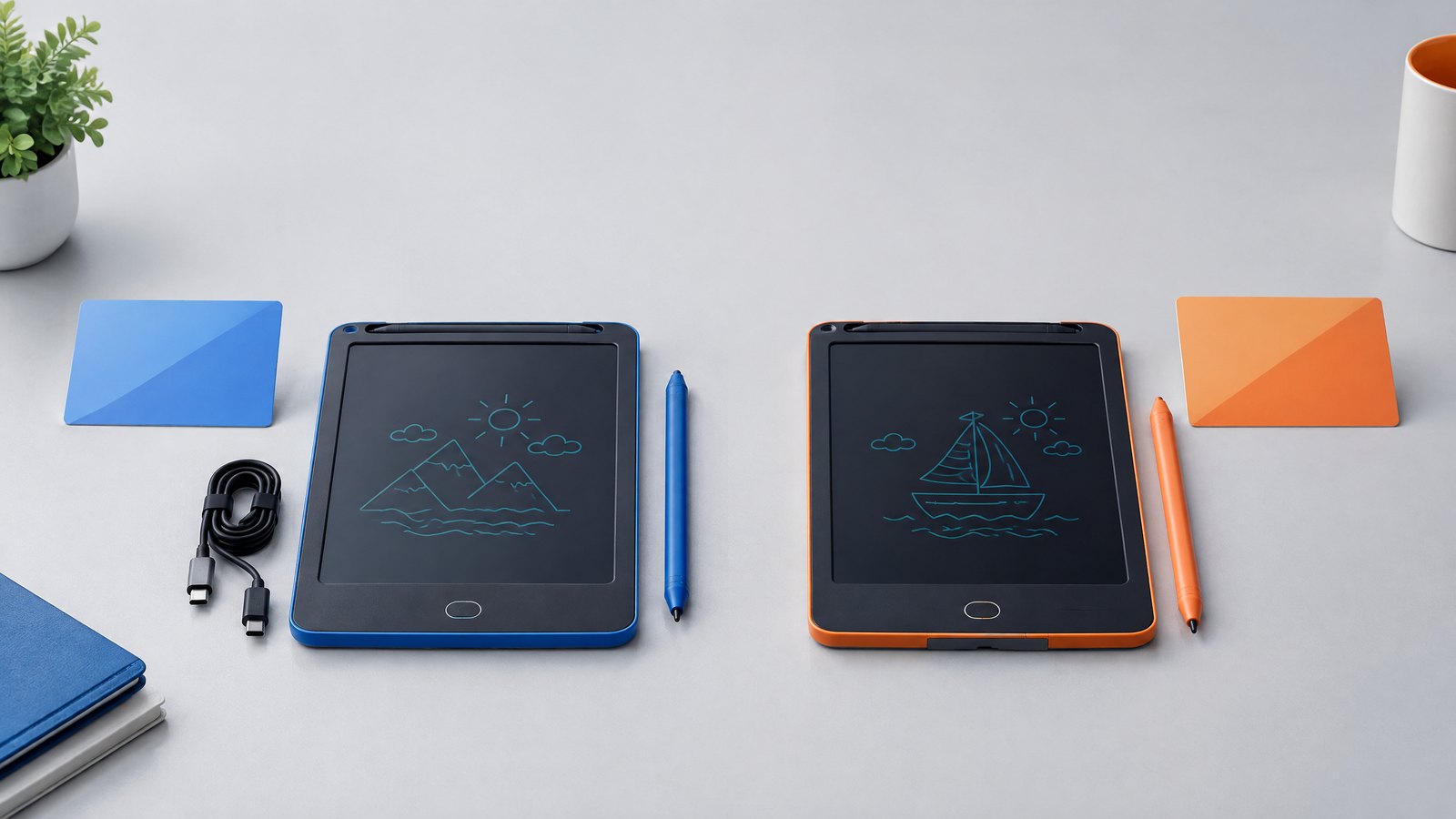
A wholesaler, distributor, or promotional buyer needs controlled SKU differentiation, carton data, final-artwork photography, and a written change policy. Separate models when the screen, power mode, stylus, branding, accessories, or packaging differ. For a campaign, controlled logo, color, and box changes to a proven standard platform are often lower risk than a new mechanical design.
Selection principle: Buy the level of complexity your end use requires. Every extra feature creates a new item to define, sample, test, label, service, and keep consistent.
4. Buyer Decision Framework
Use the following seven decisions in order. This prevents a common wholesale mistake: approving a physical sample before the commercial, operational, and market-access requirements are defined.
First, write a one-sentence product job. For example: a portable travel board, a classroom response board, or an adult meeting giveaway. This pins down user, setting, and outcome, and exposes conflicting demands such as an entry price, large screen, custom mould, gift box, and urgent air delivery.
Second, define the user and age position. Do not casually call a product “for kids” if the product listing, packaging, instructions, and physical configuration have not been reviewed as a children’s product program. In the United States, a children’s product is one designed or intended primarily for children age 12 or under, and a product subject to a CPSC rule may require third-party testing and a Children’s Product Certificate (CPC). 1 For products intended for children under three, components or fragments that fit the small-parts cylinder can create a prohibition; this includes parts liberated in use-and-abuse testing. 2 The actual intended use, age grading, claims, accessories, and destination law matter. Obtain specialist advice for the final product rather than relying on a generic age icon.
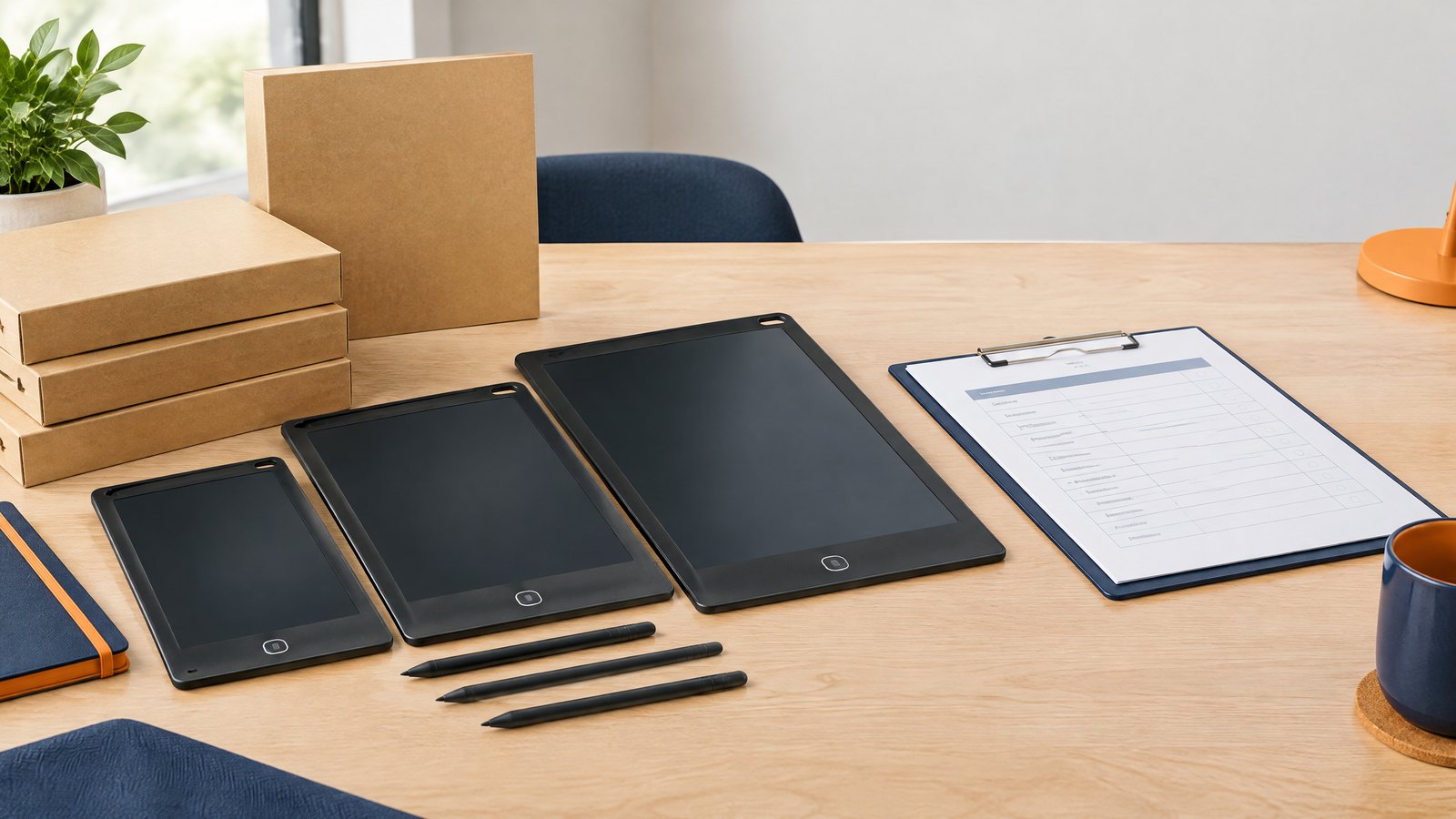
Third, rank specification priorities. Rank writing area, footprint, visibility, housing, weight, erase response, lock, stylus, power, branding, packaging, and target cost. Ranking forces trade-offs: a school desk board may need rigidity and stylus retention; a travel item may need low weight and a compact pack.
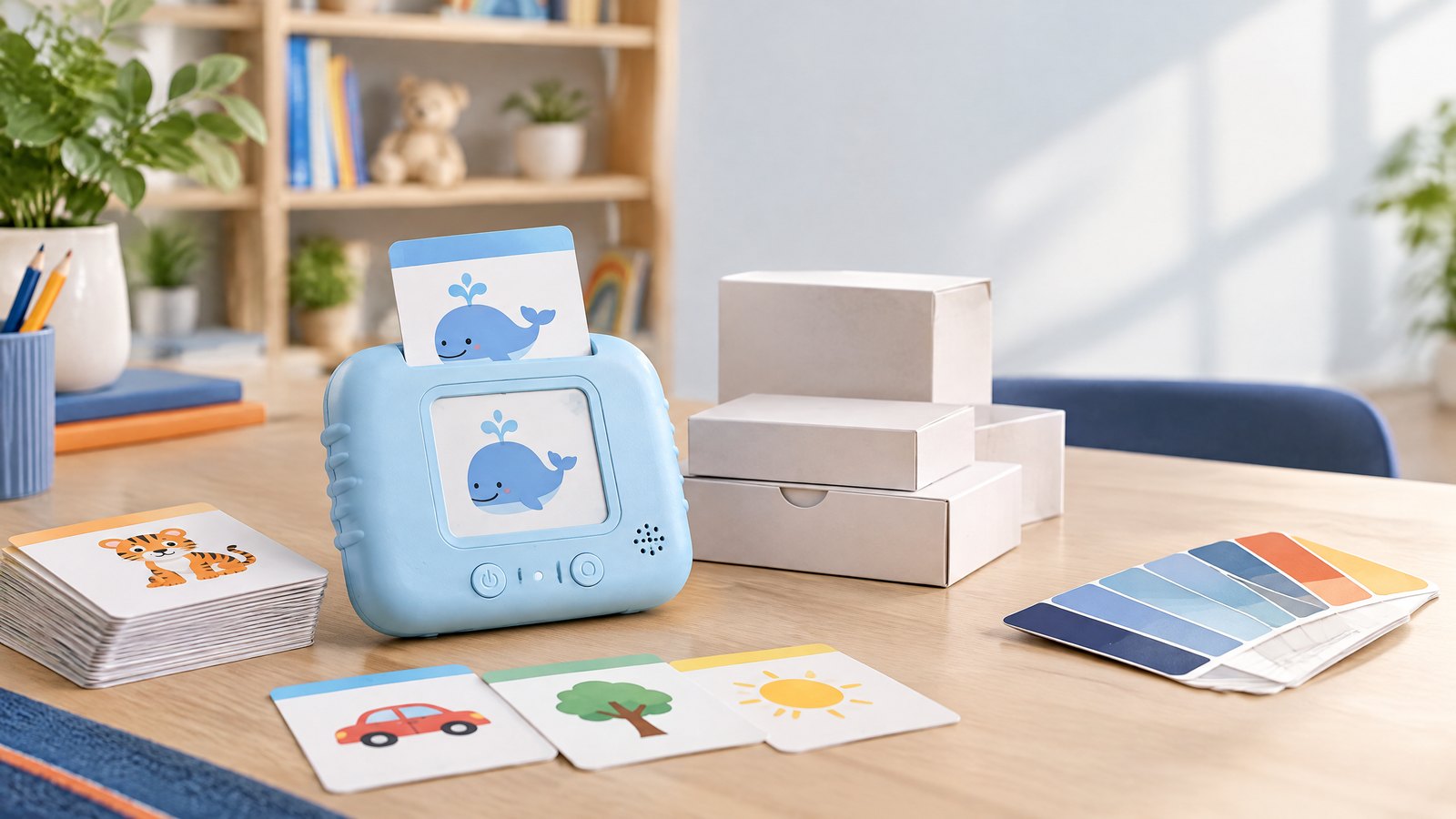
Fourth, set the power and feature boundary. A basic board may use a small battery only to clear the screen. Rechargeability, sound, data connection, or apps add testing, documentation, shipping, support, and return implications. Retain a feature only when it serves a defined use. Source talking flashcard machines and smart electronic badges under their own requirements sheets, not as equivalent e-writers.
Fifth, establish the destination-market route before final artwork. A non-radio tablet, a rechargeable tablet, a connected tablet, and a product promoted for young children may have different applicable obligations. In the EU, electrical and electronic equipment is generally within the RoHS restriction framework unless specifically excluded; the Commission lists ten restricted substances. 7 A toy placed on the EU market has its own route: the Commission describes safety assessment, technical documentation, a declaration of conformity, CE marking, traceability, instructions, warnings, and importer checks. 3 A radio-enabled version may fall under the Radio Equipment Directive (RED), which covers safety and health, electromagnetic compatibility, and efficient use of spectrum, among other requirements. 4 This is not a “certificate shopping” exercise. The European Commission specifically warns that voluntary certificates are not a recognized means of demonstrating compliance under EU harmonisation law. 4
Sixth, calculate the delivered program, not only the unit price. Include the trade term, tooling/setup, artwork and samples, applicable testing or document review, packs and cartons, freight, duty/tax treatment, local handling, warehouse cost, and replacement stock. Confirm the exact battery configuration and route with the freight partner.
Seventh, make every assumption an approval point. Link the purchase order to a dated specification, golden sample, artwork, labels, inspection criteria, and change-control process. “Same as sample” is inadequate for variants. State writing area, material/color, stylus, battery, lock, print, pack contents, carton configuration, and acceptable visual standard.
5. Comparison and Specification Table
The right comparison is based on fit, not on a universal “best” tablet. Use a matrix in which the buyer records what is mandatory, what is preferred, and what is excluded. The examples below are selection prompts, not promised product specifications.
| Decision area | Basic compact tablet | Retail private-label tablet | School-program tablet | Enhanced / connected concept |
|---|---|---|---|---|
| Typical buying objective | Entry price, simple giveaway, travel use | Branded shelf line and repeat orders | Repeated classroom or group use | A defined interactive or workflow need |
| Useful screen/format question | Is the writing area adequate for short notes or drawings? | Is the visible board large enough to communicate value at shelf? | Can users write, show, and erase at normal desk distance? | Does the interface remain useful after added controls or connectivity? |
| Housing priority | Light, smooth, simple | Consistent color, tactile quality, display protection | Rigidity, cleanability, predictable handling | Protection for added components and ports |
| Stylus strategy | Slot or simple holder | Integrated retention and presentation | Retained, identifiable, replacement-ready | Clear storage without obstructing controls |
| Power decision | Define replaceable-battery access and label requirements | Balance thinness, cost, and return risk | Plan maintenance, replacement, and staff instructions | Evaluate recharge cycle, cable, transport, service, and user support |
| Packaging priority | Efficient transit protection | Shelf message, barcode space, legal/market information | Set counting, storage logic, simple instructions | Setup guidance, accessories, and regulatory information as applicable |
| Main risk to control | Over-promising durability at an entry cost | Artwork or component drift between runs | Lost accessories and inconsistent classroom deployment | Compliance and support complexity unrelated to the core user benefit |
| Best sourcing route | Standard OEM configuration | Standard platform plus controlled logo/color/box customization | Standardized program specification with spare-part plan | Only after a documented use case and market-access review |
A good specification separates what users see from what production controls. “10-inch LCD writing tablet” does not identify active writing area, bezel, screen tint, erase/lock behavior, battery tray, stylus, logo, carton protection, or packaging language. Request a dimensional sheet that separates overall and usable area, plus images or samples of the battery compartment, label area, holder, insert, and master carton.
For color and branding, define the approved reference, artwork version, print method, location, maximum size, and legibility standard. For the display, define an observable result, such as clear writing in ordinary interior light and full erase under an agreed use check. This is more useful than an unsupported “high resolution” claim.
Mid-article CTA: Need a structured comparison of standard and customized LCD writing tablet options? Send your target market, user age, channel, desired screen format, branding brief, estimated quantity, and delivery window to info@lcdwritingtablet.com. A clear brief supports a more comparable quotation and sample plan.
6. Buyer Checklist
Use this checklist as the minimum gate before a bulk order. It is intentionally practical: it helps a buyer see where a decision is missing rather than assuming a catalogue image answers it.
| Checkpoint | What to confirm | Evidence or approval to retain |
|---|---|---|
| Use case | Target user, age position, setting, core task, and product claims | Signed product brief and claim list |
| SKU definition | Model code, screen/writing area, color, stylus, lock, battery, accessories, packaging | Version-controlled specification sheet and drawings |
| Commercial scope | Quantity, unit-price basis, tooling/setup, payment milestones, trade term, lead-time assumptions | Quotation linked to the approved specification |
| Brand execution | Logo file, print location, color reference, barcode, packaging copy, languages | Approved digital artwork and physical pre-production packaging sample where appropriate |
| Quality standard | Cosmetic standard, functional tests, sample size/inspection basis, major vs. minor defect examples | Inspection checklist with pass/fail definitions |
| Safety and compliance route | Applicable destination, product category, intended age, power/radio functions, labels, responsible operator | Market-specific compliance plan reviewed for the final configuration |
| Battery/logistics | Cell chemistry/type, installed or supplied separately, shipping method, declaration/document needs | Battery specification and logistics confirmation; UN 38.3 summary where relevant |
| Traceability | Batch/lot strategy, product identifier, factory/manufacturing date coding, carton marks | Label artwork and a traceability register template |
| Service plan | Battery or stylus replacement, spare percentage, returns process, customer-care wording | Spare-parts list and escalation contact process |
| Change control | Whether substitutions are prohibited, allowed with notice, or require written approval | Signed change-control clause |
Do not ask only, “Do you have CE/FCC?” Ask whether the final product is a toy, children’s product, general consumer product, or school equipment in the intended market; whether it contains radio equipment; whether every document matches the model, brand, battery, labels, and claims; and who is the responsible operator. A non-radio board should not carry radio assumptions from a similar product. For U.S. RF devices, appropriate authorization is required before marketing or import, with the route determined by device function. 5 EU toy importers must check the manufacturer’s conformity process and documentation, marking, traceability, and information. 3 These are prompts for professional review, not legal advice.
7. Sample, Testing, Factory, and Shipment Inspection Workflow
A sample process should move from concept confirmation to production control. Send a brief with market, age position, quantity, artwork, delivery date, and mandatory requirements. Ask the factory to record assumptions. A comparable quotation identifies its base model, included options, customization limits, pack contents, and exclusions.
Test the first sample in the intended setting, not only for logo appearance. Retail teams should assess shelf visibility, opening, write/erase action, stylus use, and label space. School teams should assess desk fit, uncoached handling, storage, collection, and left- and right-handed use. Record photos, sample ID, findings, decisions, and corrective actions. Check visibility, erase, lock if included, stylus retention, edges, battery access, surface quality, and contents. Formal assessment, where required, must match the final specification and production BOM.
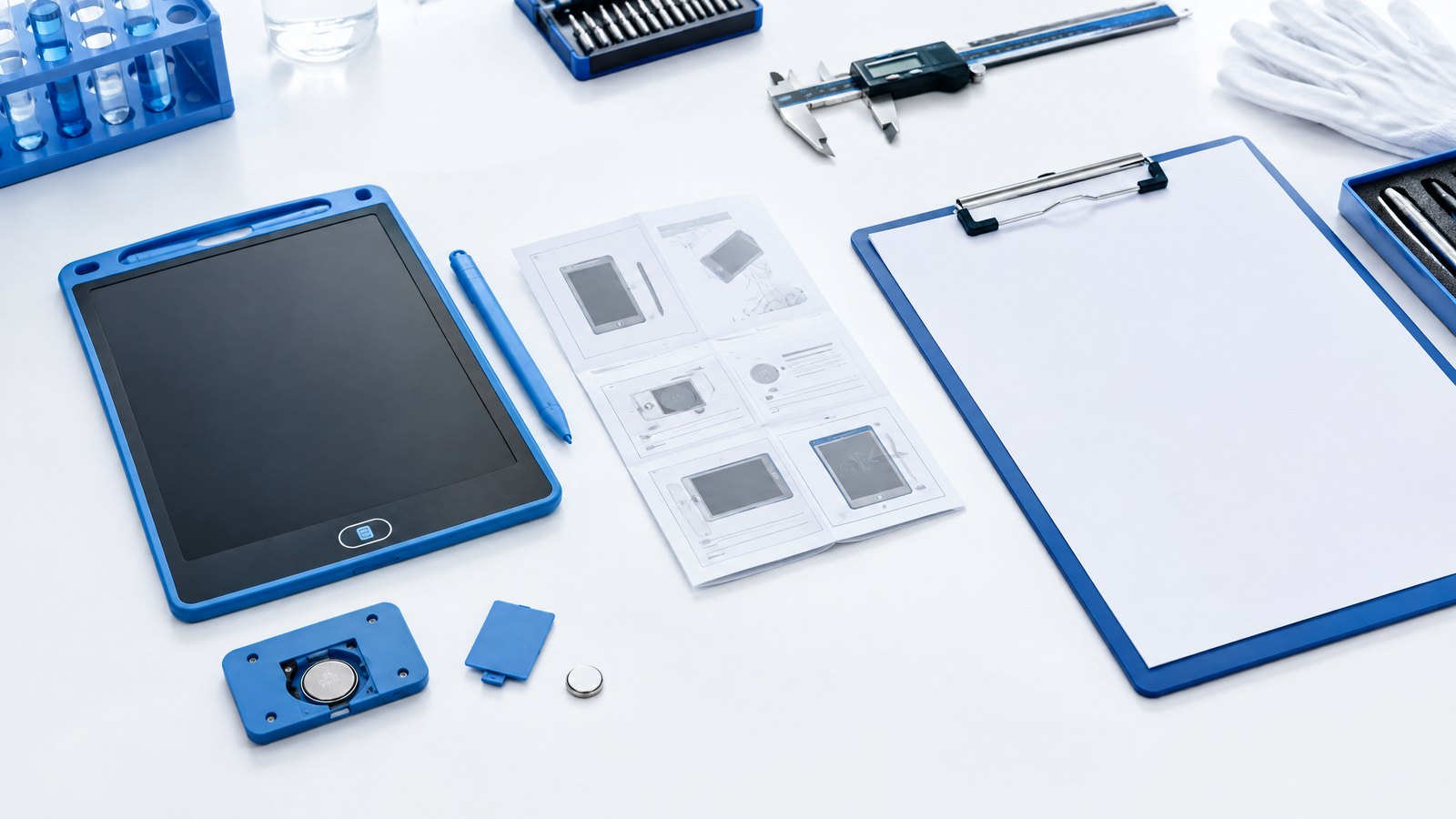
The golden sample must represent the final material, color, print, screen, stylus, power setup, labels, instructions, pack, and accessories. Keep dated images and signed approval. Reassess it if artwork or a component changes, because a small substitution can change fit, battery behavior, labeling, or document relevance.
Use incoming, first-off, in-process, packing-line, and final random checks as appropriate. The inspection plan should state carton selection, specification version, defect classes, re-inspection, and escalation. At pre-shipment, verify SKU mix, function, exterior, branding, labels, pack contents, carton marks, quantity, dimensions/weight, and shipment protection. Retain photos of lot codes, cartons, opened units, and defects. Inspection is sample-based risk control, not a guarantee of every unit.
For rechargeable or lithium-battery configurations, bring freight review forward. IATA states that applicable UN 38.3 tests are required for lithium cell and battery types in transport, and, subject to the stated button-cell exception, the manufacturer and subsequent distributors must make a test summary available. 6 Verify the exact configuration and current forwarder/carrier requirements; do not rely on a summary for a different cell or product.
8. Ordering and Implementation Preparation
A successful purchase order is an implementation file, not only a quantity and price. Attach or expressly incorporate the specification, BOM control level, golden-sample reference, artwork version, labels, packaging files, carton marks, quality standard, inspection plan, delivery window, trade term, and change-control clause. Name one buyer contact who can approve artwork and one who can approve technical changes. Agree a response deadline for deviations so that production is not held up by unclear internal ownership.
Build an implementation calendar backward from the sales or school-use date. Allow time for product confirmation, artwork adaptation, sample approval, any necessary evaluation and documentation, production, inspection, freight, customs clearance, warehouse receiving, listing creation, and contingency. The important date is not merely “factory ready”; it is the date the units can be safely received, checked, and made available in the channel. For school programs, add staff briefing, room allocation, asset tagging, and pilot distribution. For retail, add photography, product-page copy, barcode setup, planogram or shelf allocation, and replenishment rules.
Prepare the channel materials from the final product, not a prototype. Product images should show the actual screen size, contents, color, and accessories. Do not claim that the device stores drawings, is waterproof, is unbreakable, works in all lighting, is suitable for every age, or is certified for a market unless the exact final product and claim support it. Keep a master claims sheet that identifies approved wording and source. This protects retailer listings and school communications from becoming more ambitious than the product.
The receiving plan should sample inbound cartons against the shipment paperwork, check lot markings, document transit damage, count accessories, and verify model mix before distribution. Establish a quarantine process for a suspected product mismatch: isolate the lot, photograph it, compare it with the golden sample and specification, and determine whether the issue is cosmetic, functional, documentary, or safety-related. Traceability records make it easier to identify affected inventory rather than treating all stock as identical.
For larger or repeat programs, develop a simple re-order dashboard. It can track SKU, approved version, product status, remaining stock, stylus/battery spare stock, artwork version, last inspection outcome, known issues, and next forecast. This basic discipline is particularly valuable when the same exterior shell is sold in different colors, brands, or markets. It stops an old carton, wrong language insert, or unapproved logo file from re-entering a new production run.
9. Practical Applications
Retail stationery and gift assortments. Position the format around a visible task—quick notes, doodles, travel activities, or family messages—rather than as a replacement for every paper product. The pack should explain write, show, erase, and reuse without unsupported claims. Confirm shelf visibility and stylus security after display handling.
School and after-school programs. The tablet can support brief writing, drawing, response activities, practice prompts, or temporary signage. Plan class-set quantities, storage, allocation, cleaning, stylus replacement, and supervised use. Give teachers a one-page write/erase/lock guide and test the product in real classroom light and furniture layout before rollout. Where marketed or designed primarily for children, establish the correct product category and market route first.
Hospitality, events, and visitor operations. Reusable boards can support short notes, table allocation, simple instructions, welcome messages, or event stations. Choose for readability, housing appearance, cleaning, and quick staff training. Avoid connectivity unless the workflow needs it; a non-connected item can be easier to deploy, collect, and reuse.
Corporate promotional programs. Define whether recipients will use the item at a desk, on the move, or in meetings. The giveaway should be intuitive, fit the campaign’s shipping and storage plan, and carry accurate claims. Approve a real branded sample because logo scale, surface finish, and color contrast strongly affect perceived quality.
Cross-selling learning and identification products. Talking flashcard machines and smart electronic badges should not be treated as simple accessories to a writing tablet. They may introduce audio, rechargeable cells, data handling, radio functions, or different age-use patterns. Give each a separate specification and compliance review; a good range shares brand logic, not undocumented technical assumptions.
10. Detailed FAQ
What screen size should a wholesale buyer choose?
Choose size from the writing task, user setting, pack size, and price architecture. Ask for overall dimensions and active writing area, then have representative users perform the task. Travel, school, and desk boards can require different usable areas despite similar advertised diagonals.
Is a larger LCD writing tablet always better for schools?
No. A larger area may improve visibility but raise cost, storage demand, and handling difficulty. Test the proposed size against desks, storage, collection, and supervision. Choose the smallest format that reliably supports the classroom task.
Should I choose a replaceable-battery or rechargeable model?
Choose based on use frequency and support capacity. A replaceable-battery design requires a maintenance process; rechargeability adds charging equipment, cable management, transport, and service work. IATA links lithium transport permission to applicable UN 38.3 testing and calls for a test summary to be made available in the circumstances it describes. 6 Confirm the actual cell, product, route, and carrier rules before booking freight.
Can we use a supplier’s existing test report or certificate?
Possibly, after competent review confirms it applies to the final configuration, destination, category, and rules. Match model, battery, radio status, materials, accessories, age position, labels, and date. Existing evidence does not determine the legal route. For EU access, do not equate an unregulated voluntary certificate with recognized proof of compliance. 4
When does an LCD writing tablet become a children’s product or toy?
That depends on final design, intended use, presentation, and law, not a preferred label. In the U.S., a children’s product subject to CPSC-enforced rules requires third-party testing and a CPC. 1 Under the EU toy route, manufacturers must assess safety and meet documentation, marking, traceability, instruction, and warning requirements. 3 Seek market-specific advice for designs aimed at young children or containing removable components.
Do we need FCC approval for a normal LCD writing tablet?
Do not assume so because it is electronic. FCC equipment authorization concerns RF devices, and the pathway depends on functions and rules. 5 Assess Bluetooth, Wi-Fi, or other radio functions before U.S. marketing or import. Do not label a non-radio item with irrelevant approvals.
How many samples should we approve?
There is no universal number. Approve each meaningful stage: functional base sample, customized artwork/color sample, package sample, and final golden sample representing mass production. Obtain evidence for each color, packaging-language, or accessory difference; a standard sample should not silently represent a different stylus, battery, or branded color.
What defects should the inspection plan cover?
Define defects by user impact and legal/operational risk. Critical issues may include sharp edges, incorrect product/age information, battery-compartment issues, missing warning or traceability data, the wrong model, or failed erase. Major issues can include display marks, failed lock, loose stylus retention, housing gaps, wrong accessories, or wrong branding. Agree categories and acceptance rules before production.
Can the factory change an “equivalent” component to avoid delay?
Not without a documented decision. An equivalent component can change fit, color, battery performance, durability, documentation relevance, or regulatory status. Require written notice, an impact statement, and buyer approval. For a material change, revise the specification, sample, artwork, inspection plan, and relevant documents before release.
What information should be included in a wholesale enquiry?
Provide market, channel, target user/age, format and writing area, estimated quantity, brand files, color, packaging, delivery window, battery/recharge/radio expectations, compliance questions, price context if available, and OEM versus ODM scope. This enables a specific quotation rather than a guessed configuration.
11. Conclusion: Choose the Controlled Program, Not Just the Tablet
The right LCD writing tablet wholesale decision comes from a controlled chain of choices: define the user and channel, select only the features that serve that use, document the final specification, review the market route, approve representative samples and packaging, inspect production and shipment readiness, and prepare the receiving and rollout workflow. This approach helps retail buyers create clearer assortments, gives schools a manageable deployment plan, and helps distributors preserve SKU and document control across repeat orders.
The central buying question is therefore not “Which tablet is cheapest?” It is “Which final configuration can we specify, verify, ship, receive, and support with confidence in our market?” Use the tables and gates in this guide to build a comparable supplier brief. Recheck all safety, environmental, battery, radio, labeling, and import obligations against the precise product, destination, claims, and responsible economic operator before placing the product on the market.
Final CTA: For an LCD writing tablet wholesale quotation or sample discussion, email your product brief to info@lcdwritingtablet.com. Include your market, channel, intended user, preferred format, branding, quantity, packaging needs, and target delivery window so the proposed option can be assessed against your real program requirements.
References
Turn this sourcing plan into a product brief.
Share your target market, product requirements, packaging preference and estimated volume for a practical OEM / ODM discussion.