This guide provides a practical B2B decision framework. Final specifications, market obligations, testing scope, labels, packaging and shipment requirements must be confirmed for the exact finished SKU and destination.
Introduction
Private-label LCD writing tablet projects often start with a simple request: “Please send your best price for a writing tablet with our logo.” That request is understandable, but it leaves too many commercial decisions undefined. A buyer may receive a quotation for a small monochrome model, while another supplier quotes a larger color model with a different battery, accessory set, carton quantity, and packaging scope. The prices cannot be compared fairly because the products are not equivalent.
A reliable private-label project begins with a product-line decision, not a logo file. The buyer first identifies the sales channel and end user, then chooses the right tablet architecture, power configuration, branding level, packaging, inspection plan, and documentation path. Only after those decisions are visible should the supplier issue a final quotation and prepare a production sample.
This guide explains a practical workflow for importers, distributors, retailers, educational-product brands, promotional-product companies, and e-commerce sellers. It focuses on the decisions that affect repeat orders: SKU positioning, screen size, use case, battery format, packaging, sample approval, factory testing, and shipment control.
The short answer: what makes a private-label LCD writing tablet line work?
A private-label LCD writing tablet line works when every SKU has a clear buyer, use case, price position, configuration, packaging format, and quality standard. Start from a proven base model where possible, approve a physical sample, lock the artwork and product specification by revision, and define the shipment inspection before mass production. A lower unit price is not useful if the model is difficult to explain, the packaging does not suit the channel, or the approved sample is not the same as the production version.
1. Start with the channel and customer, not the factory catalog
The same LCD writing tablet can be positioned very differently depending on where it will be sold. A travel retailer may need a compact tablet with a carabiner or keychain format. A school-supply distributor may prefer a larger writing area, simple operation, clear age grading, and cartons that are easy to count. An Amazon seller may prioritize a strong retail box, barcode placement, protective packaging, and a configuration that can be replenished consistently.
Before asking for a quotation, write down five basic decisions:
| Decision | Questions to answer | Why it affects the project |
|---|---|---|
| Target customer | Children, families, teachers, office users, gift buyers, or institutional users? | It influences size, instructions, age position, and product language. |
| Sales channel | Retail shelf, Amazon, distributor, school tender, promotion, or direct e-commerce? | It determines packaging, labels, carton data, and fulfillment needs. |
| Market | United States, European Union, United Kingdom, Canada, Australia, or multiple regions? | It affects documentation, warnings, language, and responsible-party requirements. |
| Launch quantity | Pilot order, seasonal campaign, or ongoing replenishment? | It affects MOQ, artwork economics, and the right level of customization. |
| Differentiation | Price, durability, color, shape, education value, sustainability, or gift appeal? | It determines which product features deserve development budget. |
This short brief makes supplier conversations more efficient. It also gives the buyer a way to compare quotations on the same basis instead of comparing unrelated numbers.
2. Choose a product architecture that can be explained in one sentence
Product lines become difficult to sell when every model has a long list of features but no clear role. A practical range usually contains a small number of understandable tiers rather than many nearly identical SKUs.
Entry or high-volume model
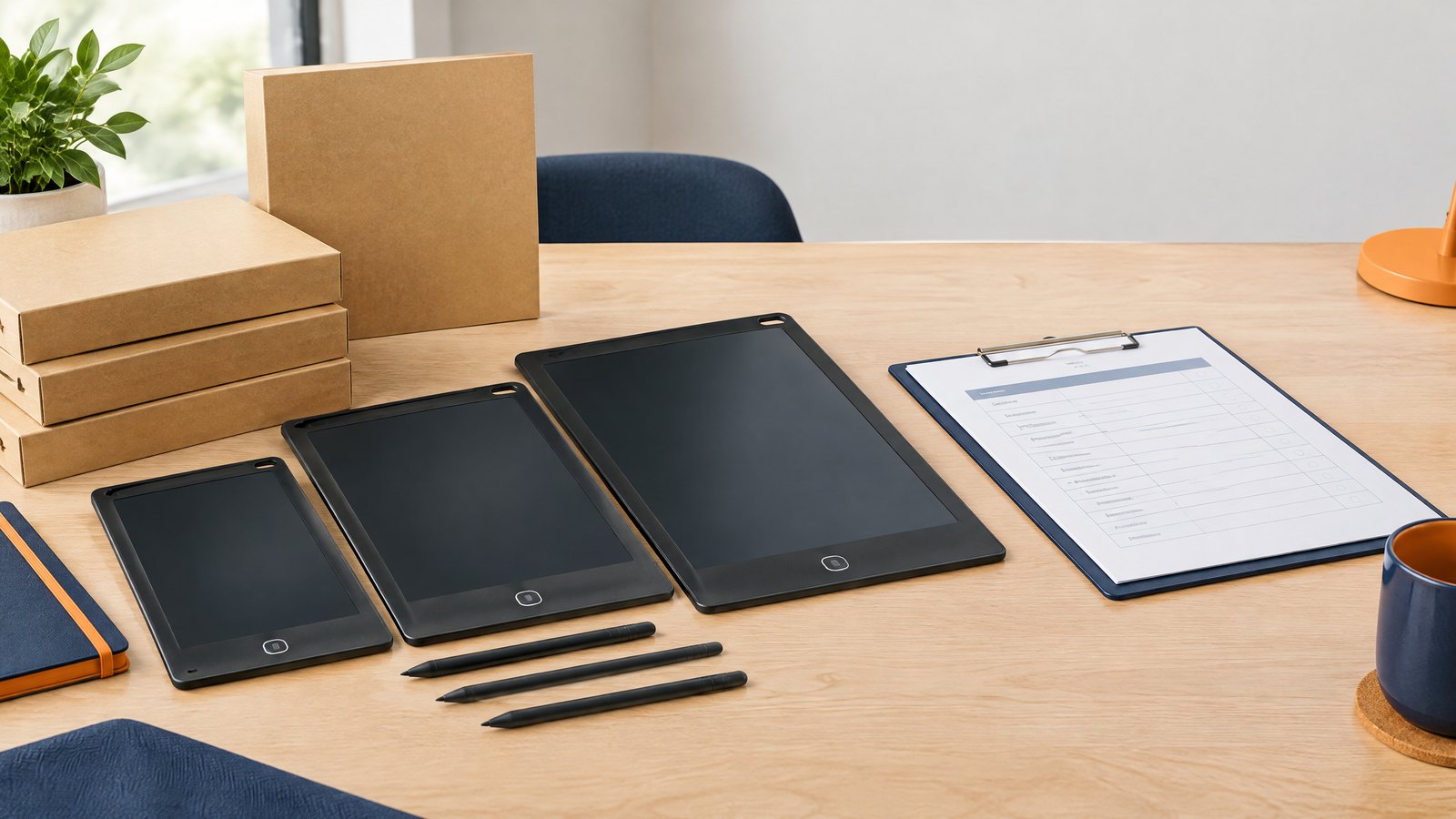
An 8.5-inch LCD writing tablet is often suitable for a compact, accessible retail or gift position. It can support drawing, early handwriting practice, travel activities, and everyday reminders. The key buying questions are screen visibility, frame durability, stylus retention, erase reliability, battery access, and packaging cost.
Education or larger-format model
A 10- or 12-inch model gives children and students more room for handwriting, math practice, diagrams, and classroom activities. A larger surface can improve usability, but it also changes the carton size, shelf footprint, shipping cost, and perceived retail value. It should be selected because the use case needs the extra area—not simply because a larger number sounds better.
Feature-led model
A feature-led SKU can use a drop-resistant silicone frame, a transparent screen for tracing, a split writing area, a Type-C rechargeable design, or a character-shaped housing. These features should solve a specific buyer problem. For example, a transparent tracing tablet can support alphabet or number cards placed underneath; a split-screen model can be used for a question-and-answer activity or two-player game.
The current LcdWritingTablet range includes published formats such as NeoDoodle 8.5-inch, ColorZone 10-inch, SlatePro 12-inch, EcoTab 10.5-inch Type-C rechargeable, DualZone 11-inch split-screen, KidTrace 9-inch transparent, and PocketMini 4.5-inch keychain models. These are useful starting points, but the final configuration, price, and documentation should always be confirmed in the quotation and approved sample.
3. Decide which features deserve private-label investment
Not every change needs a new mold. A buyer can usually divide customization into three levels.
Level 1: branding on a proven model
This is the most direct route for a pilot launch. The buyer keeps the existing structure and changes the logo, color selection, stylus branding, instruction card, and retail packaging. It reduces technical uncertainty and makes the sample-to-production path easier to control.
Level 2: semi-custom product configuration
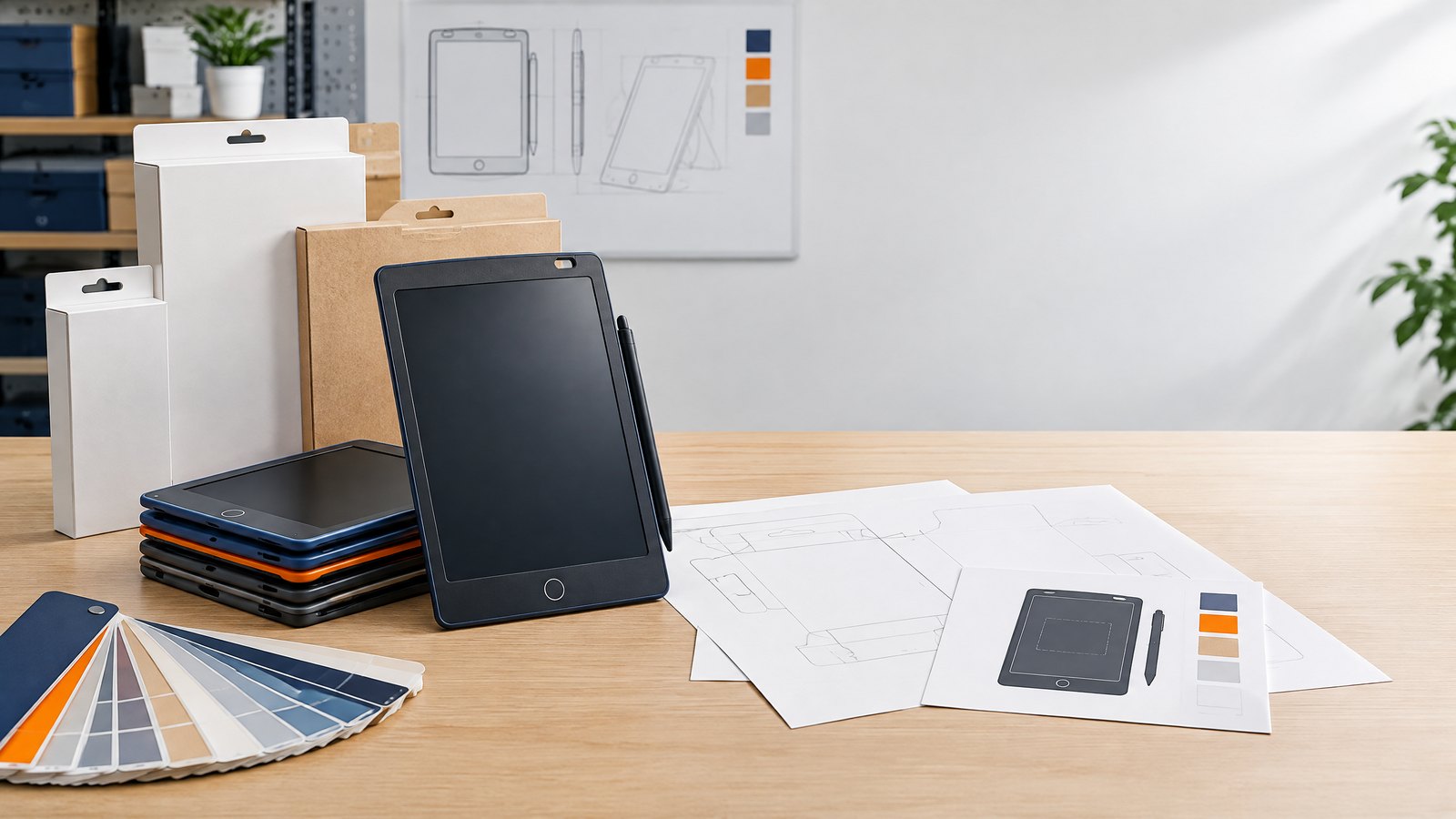
The buyer chooses a proven platform but changes selected details, such as Pantone housing colors, silicone bumper colors, stylus shape, printed scale, accessory bundle, or packaging format. This can create a more distinctive shelf presence without starting a complete product-development program.
Level 3: full ODM or OEM development
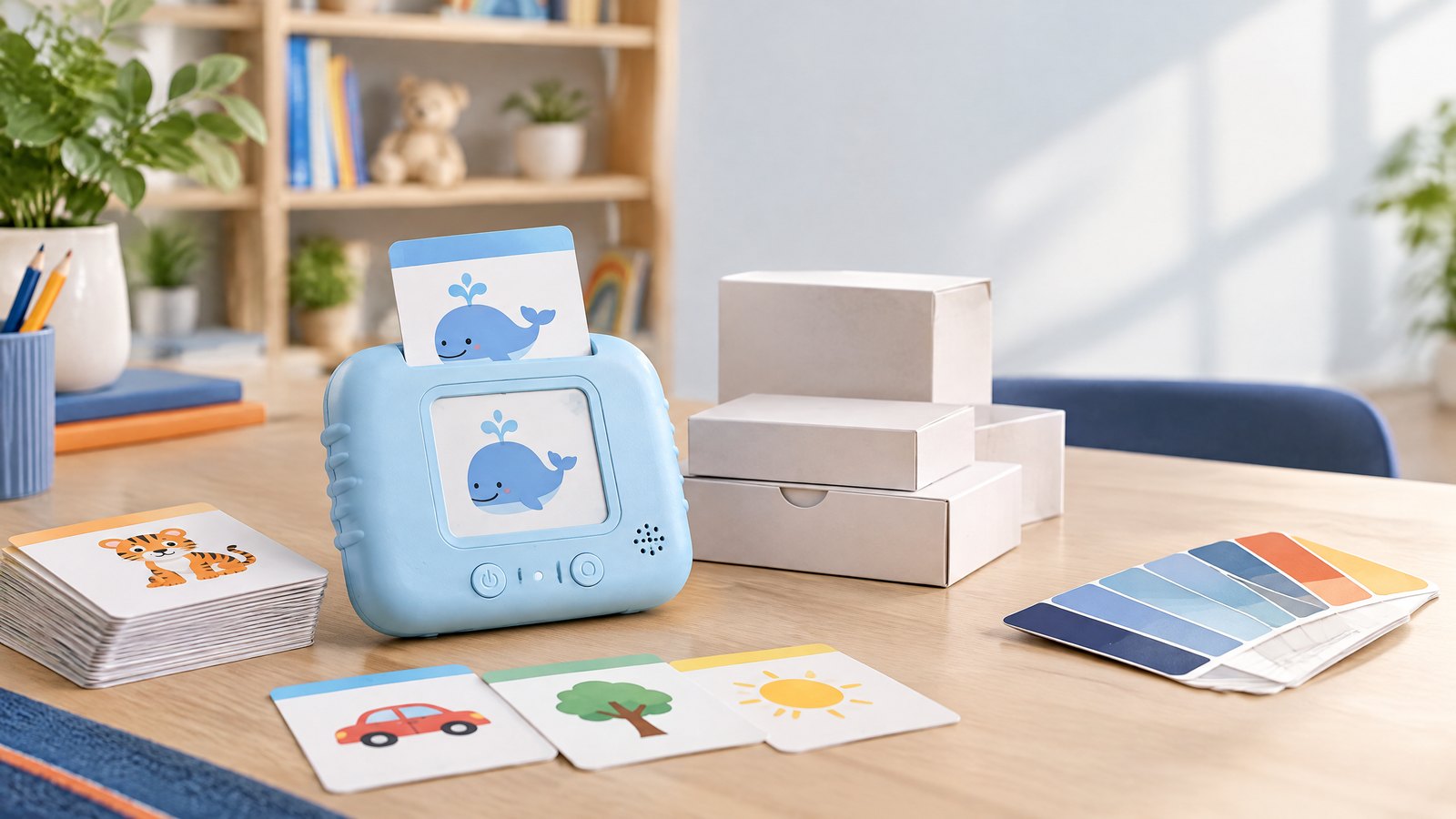
Full customization may involve a new housing shape, exclusive character design, new tooling, a different battery architecture, or a combined product such as a talking flashcard and LCD writing tablet. It can create stronger differentiation, but it also requires more engineering review, more samples, a longer approval cycle, and clearer intellectual-property ownership.
The important point is to match customization depth to the commercial plan. A seasonal promotional order may not justify new tooling. A brand planning several years of distribution may consider it worthwhile if the design creates defensible differentiation.
4. Treat packaging as part of the product specification
Packaging is not an afterthought. It affects customer understanding, retail presentation, protection during transport, labeling, fulfillment, and the cost of every reorder.
At the quotation stage, specify:
- retail box, kraft mailer, blister, or e-commerce shipper;
- box dimensions and window requirements;
- languages for the packaging and manual;
- logo placement and color references;
- barcode, FNSKU, carton label, and importer information;
- age grading and warning copy;
- accessory count and insert-card content;
- inner-pack quantity and master-carton quantity;
- drop protection for the final shipping configuration.
For Amazon or other marketplace fulfillment, the product box and master carton should be reviewed together. A product can pass a visual packaging review but still create problems if the barcode is placed over a seam, the carton markings are incomplete, or the retail box is not protected for the intended logistics route.
Our OEM and packaging page describes a workflow that includes artwork proofing, pre-production samples, mass-production QC, and export inspection. Buyers should use this as a discussion framework and request the exact artwork revision, carton specification, and inspection records for their model.
5. Use a sample approval process that can be repeated
The first sample is not only for checking whether the tablet can write. It is the reference point for production control.
During sample review, check the following:
Product function
Test writing pressure, line visibility, erase response, lock operation if included, stylus fit, battery compartment access, and any special function such as transparent tracing or independent split-screen erasure.
Physical quality
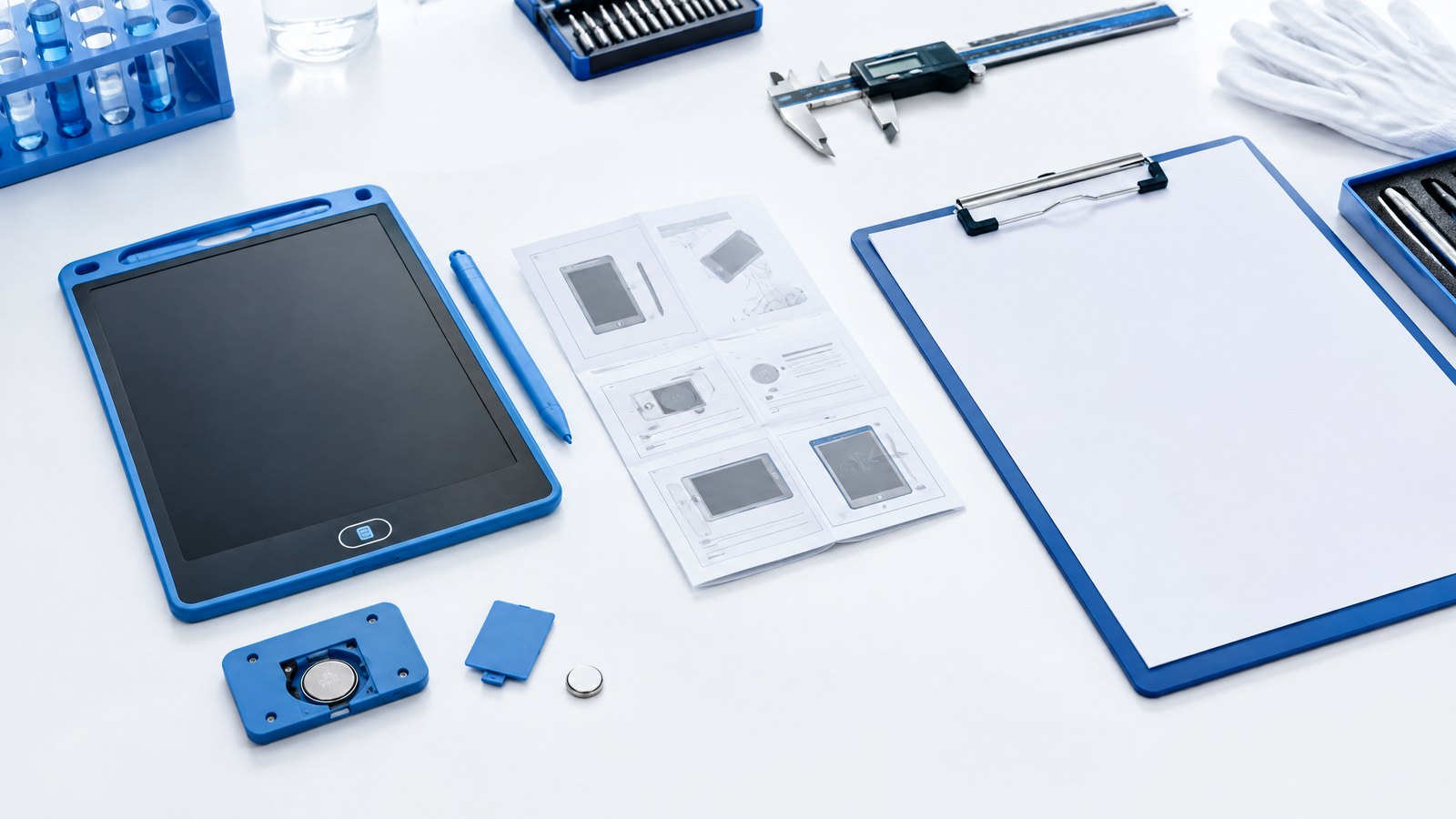
Inspect frame edges, buttons, silicone seams, screen surface, logo position, screw fit, stylus finish, and the relationship between the device and its retail packaging. Take photographs of details that could become inspection references.
Packaging and documentation
Confirm that the product name, model number, age statement, warnings, barcode, language version, importer details, and accessories match the approved brief. Do not approve a box based only on a digital mockup if the final print color, paper board, window, or insert fit has not been checked.
Configuration record
Write the approved battery model, housing material, color reference, screen size, dimensions, weight, accessory list, and carton quantity into a controlled specification sheet. A product that changes one of these items after approval may require a new review.
6. Build factory testing and shipment inspection into the quotation
The best private-label programs treat quality control as a sequence rather than a single final inspection. A practical sequence includes incoming-material checks, assembly checks, functional testing, packaging review, quantity verification, and pre-shipment inspection.
For LCD writing tablets, functional checks can include a writing-area check, erase-button response, erase-lock operation, battery installation, screen appearance, stylus inclusion, and cosmetic inspection. If the supplier publishes a lifetime figure such as 100,000 erase cycles, the buyer should ask how that figure is defined and what evidence is available for the exact model. A marketing specification and a test protocol are not the same thing.
The LcdWritingTablet factory pages describe 100% optical erasure testing and an AQL-based final inspection workflow. For a real purchase order, the buyer should convert those statements into a written inspection brief: sample size, critical defects, major defects, minor defects, function criteria, packaging criteria, and release authority.
7. Plan MOQ and reorder economics realistically
MOQ is not one universal number. It can change according to logo method, custom color, packaging, new tooling, and accessory bundle. The current site communicates a standard OEM starting point of 500 units for logo branding, while custom Pantone masterbatch and fully customized packaging may require a different quantity. Treat those figures as starting points for discussion, not as a substitute for a model-specific quotation.
For a pilot order, ask the supplier to separate:
- stock model unit price;
- logo setup or printing cost;
- packaging setup and printing cost;
- sample and courier cost;
- tooling cost, if applicable;
- inspection cost;
- shipping and trade-term assumptions;
- reorder price at the expected annual quantity.
This structure helps the buyer understand whether a low first-order price will remain viable at reorder. It also prevents artwork, tooling, and freight assumptions from being hidden inside a single unit-price number.
8. What to include in a supplier RFQ
An effective RFQ can be short, but it should be specific. Include the target market, sales channel, preferred screen size, core function, battery preference, target quantity, logo and packaging requirements, sample deadline, and delivery destination. If the model is for children, include the intended age range and ask the supplier to identify which documents and tests are configuration-dependent.
For example:
We are evaluating a private-label LCD writing tablet for the US and EU education-retail channels. Please quote an 8.5- or 10-inch model with erase lock, branded frame and stylus, retail box, multilingual manual, and shipment inspection. Initial quantity: 1,000 units. Please provide sample timing, MOQ basis, carton data, battery configuration, available compliance documents, and the differences between stock, semi-custom, and full OEM options.
This message gives the supplier enough information to answer commercially while leaving room for a professional recommendation.
Frequently asked questions
What is the typical MOQ for a private-label LCD writing tablet?
MOQ depends on the branding method, color, packaging, and tooling scope. A proven model with a printed logo may have a lower MOQ than a custom Pantone housing or new mold. Ask for the MOQ for each element separately and confirm it in the quotation.
Is it better to start with one model or several models?
Most new brands should start with one clearly positioned model or a small two-tier range. One model makes sample approval, packaging, marketing, and inventory control easier. A second model can be added when the buyer can explain the difference in use case or price position.
Can a supplier customize the LCD writing tablet shape?
Yes, some manufacturers can develop custom housings or character shapes, but this normally involves tooling, engineering review, samples, and IP terms. If the shape is important to your brand, request a tooling schedule and ownership terms before approving development.
Should I choose a coin-cell or rechargeable model for a private-label line?
The answer depends on price position, expected usage, transport, service model, and target-market requirements. A rechargeable model can support an eco-oriented position, while a replaceable coin-cell model may suit a lower-cost, simple product. The battery choice should be reviewed with the exact product configuration and compliance plan.
What should I request before mass production?
Request a production-grade sample, a controlled specification sheet, artwork proof, packaging proof, agreed inspection criteria, carton data, and the model-specific documentation that applies to your destination market.
Conclusion
Building a private-label LCD writing tablet line is a product-management exercise as much as a sourcing exercise. The strongest projects connect the customer and sales channel to a clear SKU role, a realistic customization level, a controlled packaging plan, and a repeatable quality process.
Start with the use case. Choose a proven architecture where it makes sense. Invest in custom shape or color only when it supports a real commercial goal. Approve the physical sample, document the configuration, and define the shipment inspection before releasing the order. This approach gives importers and brands a better chance of receiving a product they can explain, sell, and reorder with confidence.
CTA
Planning a private-label LCD writing tablet range? Send your requirements with your target market, screen size, quantity, logo needs, packaging direction, and launch date. The factory team can recommend a suitable base model and prepare a specification-based quotation.
Turn this sourcing plan into a product brief.
Share your target market, product requirements, packaging preference and estimated volume for a practical OEM / ODM discussion.