
This guide provides a practical B2B decision framework. Final specifications, market obligations, testing scope, labels, packaging and shipment requirements must be confirmed for the exact finished SKU and destination.
Introduction
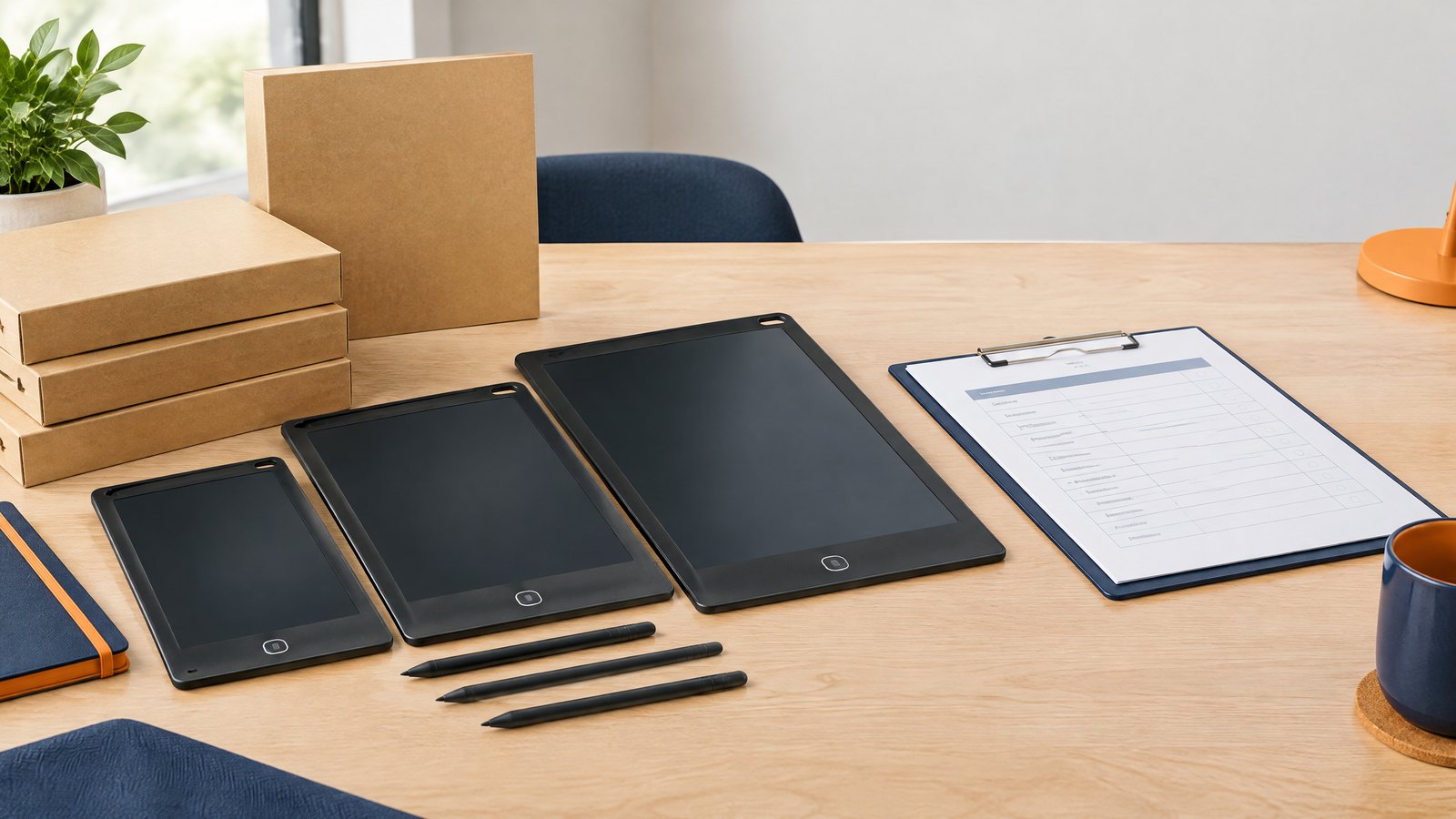
Direct answer: Consider a custom LCD writing tablet mold only when a documented product application cannot be met by a standard or lightly modified platform. A new housing changes dimensions, panel fit, stylus storage, controls, material, packaging, tooling, sample path, inspection criteria, and launch risk. Start with a clear user requirement and confirm whether an existing model plus controlled customization can meet it first.
A custom shape can be commercially useful when it improves a defined task: a stand interface, card placement, grip, storage, brand story, or accessory system. It should not be chosen merely because a custom mold sounds more premium. Every structural change adds decisions that must be approved and maintained through reorders.
1. Identify the problem an existing platform cannot solve
Direct answer: Describe the unmet task in measurable or observable terms before requesting a new mold. “We want a unique product” is not a product requirement; “the board needs to hold a specified activity card while standing at a defined desk angle” is a usable starting point.
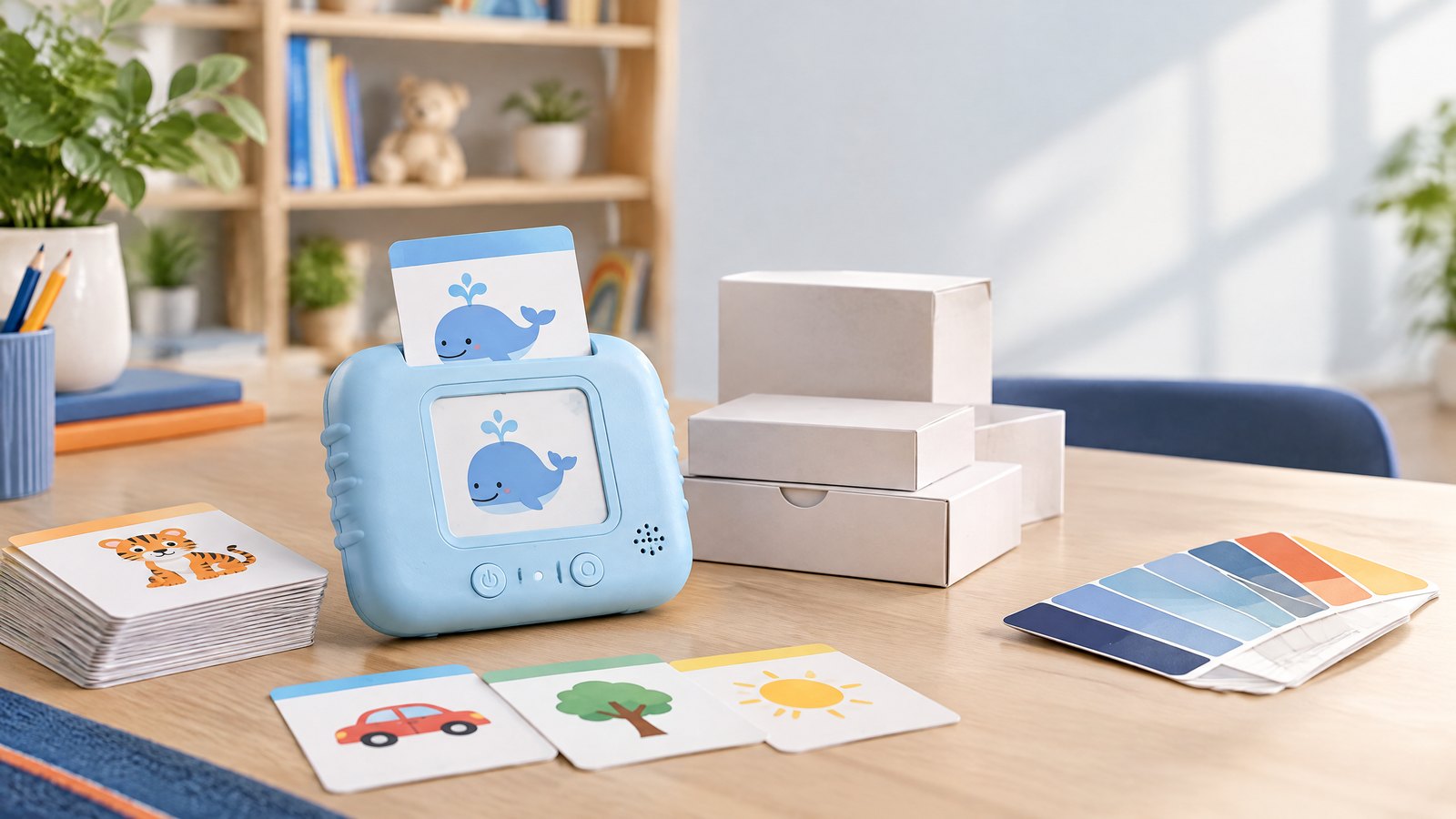
Ask whether an existing platform can meet the need with a new color, logo, pack, pouch, stand, card set, or insert. If it can, that route may offer a simpler sample and quality path. If it cannot, document the desired dimensions, active area, screen position, housing form, button/lock access, stylus retention, accessories, pack, user, market, and quantity range.
The white-label/private-label/ODM guide helps buyers choose the correct level of change.
2. Define the custom housing brief
The brief should include front/back/side intent, target product and active-area dimensions, edge geometry, material/finish expectations, stylus location, erase/lock/battery/port access, brand area, accessory interfaces, packaging direction, and operating environment. Identify what is mandatory, preferred, and open for engineering advice.
Do not make unsupported durability, waterproof, child-safety, or drop claims part of the design brief. If a performance claim is needed, define the relevant use condition and validation approach for the final product.
Mid-article CTA
Considering a custom LCD writing tablet housing? Send your requirements with the user task, target market, desired shape/size, screen and stylus needs, accessory plan, quantity range, and packaging direction. We can help determine whether a standard platform or an ODM path is more appropriate.
3. Plan prototypes and sample approval
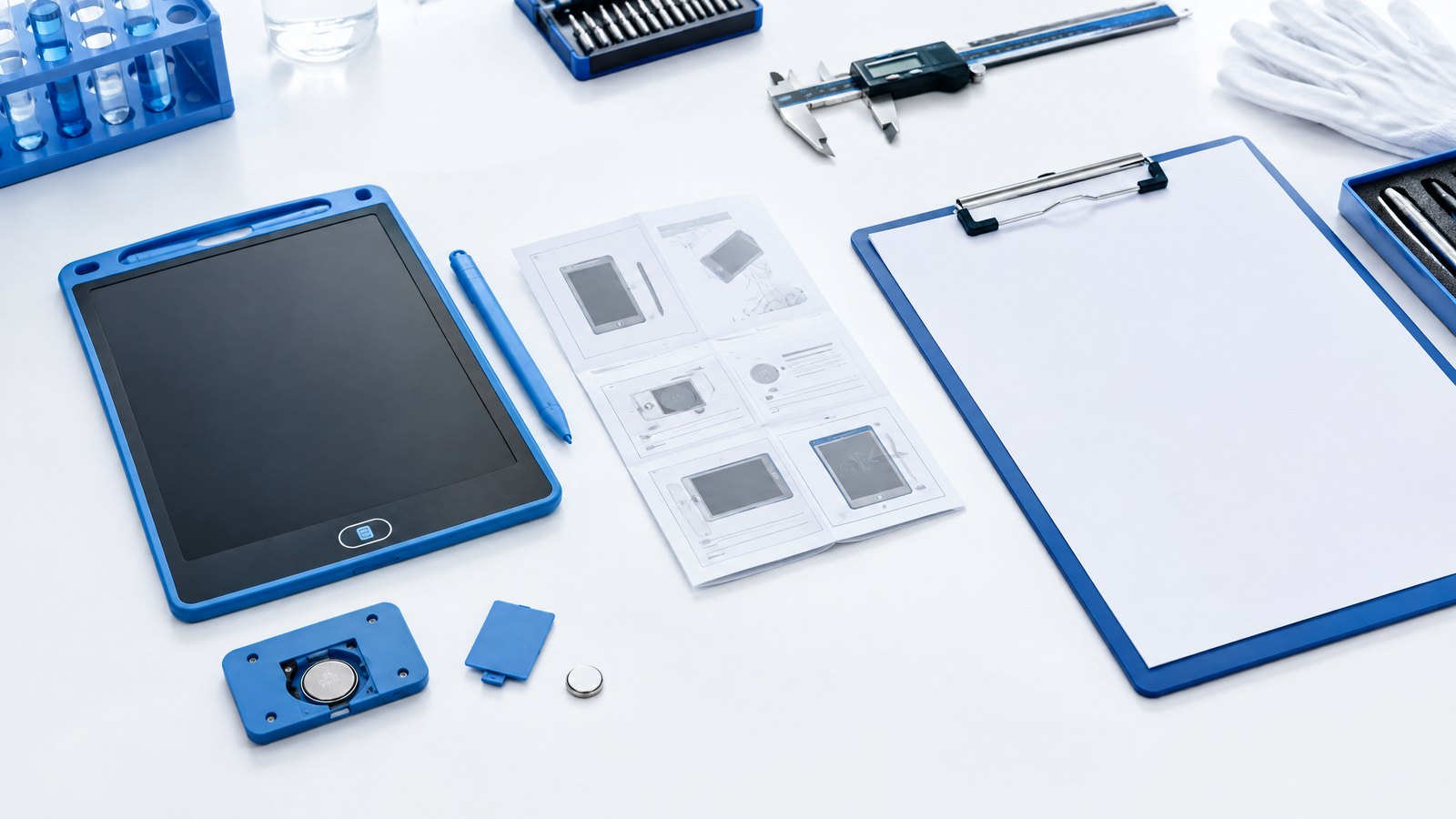
The first sample should test fit and user task, not just appearance. Evaluate panel placement, active writing area, hand grip, stylus storage, buttons, lock behavior, battery/charging access, stand/card/pouch interaction, packaging, and first-use instructions. If the product is for a defined user group, test the representative task in the expected environment.
Each prototype revision should be identified and documented. Record changes, their reason, parts affected, next test, and approval status. A golden sample should not be declared until the finished configuration, accessories, pack, labels, and operational details are controlled.
4. Carry the design into factory testing and inspection
Custom housing requires an inspection reference that includes dimensional and visual checks, fit/assembly points, screen and control functions, stylus/accessory compatibility, logo/finish, package protection, and carton configuration. Factory testing should use the approved sample and written checks; shipment inspection should compare finished goods against that reference.
If a mold, material, or component changes after approval, review whether it affects function, packaging, content, documentation, or inspection. The golden-sample guide explains how to keep revisions controlled.
5. Plan lifecycle and reorder responsibilities
Before production, discuss ownership/responsibility for engineering files, tooling care, approved revisions, part changes, spare styluses/accessories, packaging updates, and reorder notification. The contractual details should be handled by the buyer and appropriate advisers, but operational expectations should not be left vague.
Use the SKU management guide to connect the final housing version to the correct product, packaging, and inspection records.
FAQ
When do I need a custom LCD writing tablet mold?
Consider it when a defined product application needs a housing or functional interface that a standard platform with controlled branding, accessories, or packaging cannot provide.
Does a custom mold mean the product is automatically unique?
It may create a distinctive housing, but commercial value still depends on the user task, product quality, packaging, claims, and channel fit.
What should be checked on a prototype?
Check dimensions, screen position, writing area, grip, controls, stylus, accessories, pack fit, intended task, and any proposed validation requirements.
How does tooling affect shipment inspection?
The final housing and assembly need product-specific visual, fit, dimensional, functional, packaging, and carton checks based on the approved reference.
Conclusion
Custom tooling is a product-development commitment, not a branding shortcut. Start with the problem the user needs solved, compare it with existing-platform options, build a specific housing brief, test prototypes in the real product application, and convert the approved result into controlled factory and shipment checks. This gives a custom project a clearer path from concept to reorder.
Final CTA
Contact us about custom LCD writing tablet housing and tooling. Include your application, target market, product dimensions, screen/stylus needs, accessories, packaging, and quantity range.
Turn this sourcing plan into a product brief.
Share your target market, product requirements, packaging preference and estimated volume for a practical OEM / ODM discussion.