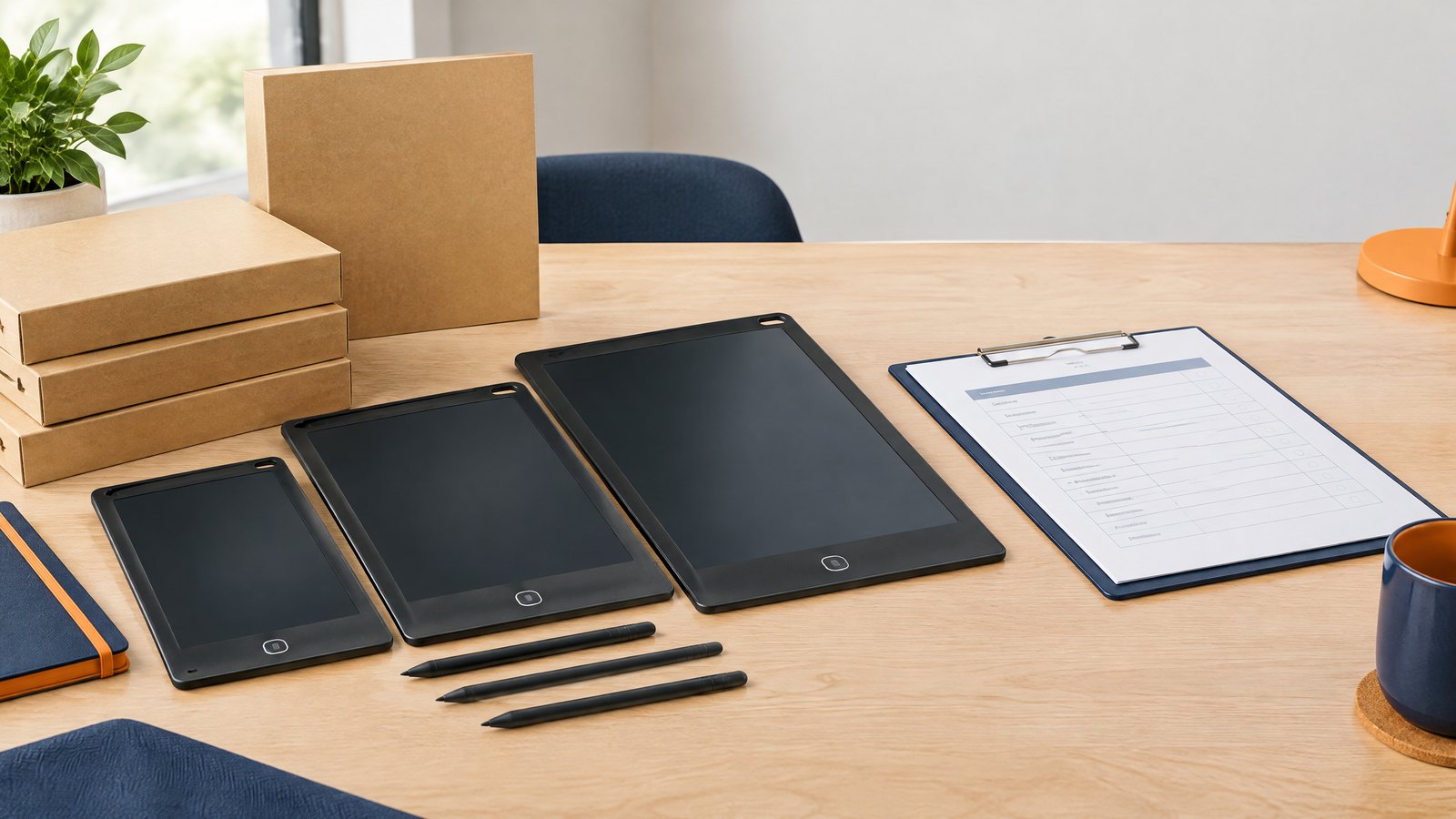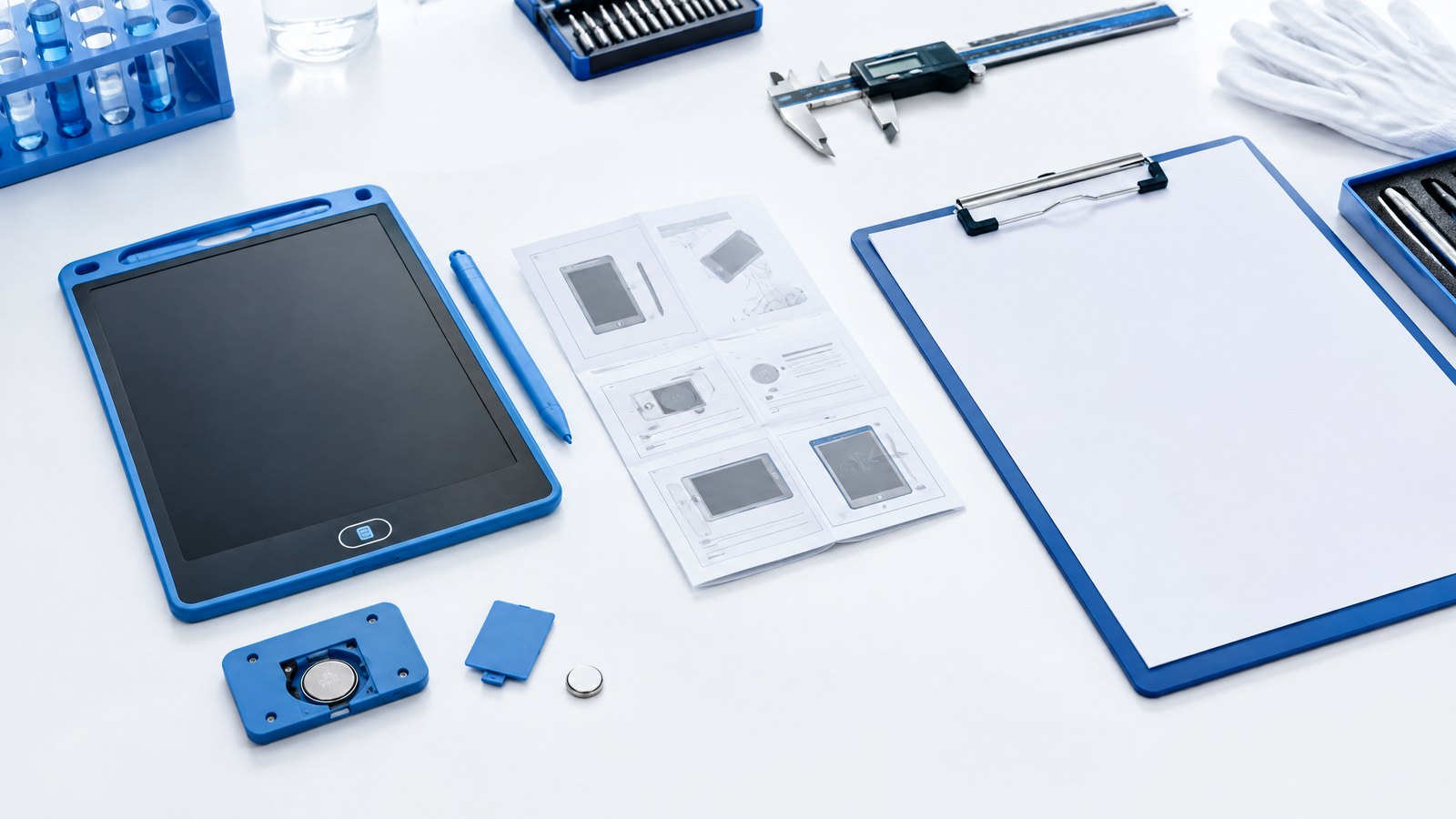

This guide provides a practical B2B decision framework. Final specifications, market obligations, testing scope, labels, packaging and shipment requirements must be confirmed for the exact finished SKU and destination.
Introduction
Direct answer: Select an LCD writing tablet housing by the real handling environment, product application, pack route, and service plan—not by a generic “durable” claim. Confirm the frame material, panel protection, edge geometry, stylus retention, button fit, battery/charging access, finish, and packaging protection through an approved production-intent sample and documented inspection criteria.
The writing panel attracts attention, but the housing determines much of the daily ownership experience. A frame can affect grip, apparent size, writing-area access, logo placement, screen protection, stylus storage, and pack dimensions. A silicone bumper can change grip and edge feel, yet it may also change fit, surface finish, packing thickness, and cleaning requirements. A thin compact model may be ideal for a travel set while a classroom program may value a more stable and easily identified format.
No material choice is automatically right for every channel. The buyer’s task is to convert real customer requirements into measurable or observable specification points, then test the chosen configuration rather than relying on a catalog description.
1. Start with handling conditions, not a material name
Direct answer: Write down where the product will be carried, stored, used, and packed. Then decide which housing characteristics matter: light weight, edge protection, grip, cleanability, logo visibility, stylus retention, stand compatibility, or carton efficiency.
For example, a promotional tablet handed out at an event may prioritize a slim profile and a clean print area. A school program may prioritize a frame that is easy to identify and a stylus that returns to its holder. A retail gift item may prioritize surface finish and protective packaging. A counter-sign model may need a stable edge or holder interface.
Use a brief table before requesting a sample:
| Customer requirement | Housing question to define |
|---|---|
| Frequent carrying | Is the footprint, weight, and stylus retention practical? |
| Child-directed or school use | Are edges, controls, storage, and instructions appropriate for the intended program? |
| Retail shelf presentation | Does the finish, color, logo position, and pack communicate the actual model? |
| Gift or promotional distribution | Will the frame and pack protect the board through handling and shipment? |
| Repeated desk/counter use | Is the board stable, easy to pick up, and compatible with the planned holder? |
2. Review the complete housing system
Frame and bezel
An LCD writing tablet ABS frame or comparable plastic housing may offer a defined rigid structure and a broad area for color or logo treatment. The buyer should confirm the exact resin and finish only when the supplier has identified it for the final model. A generic product photo cannot establish material grade, impact performance, or regulatory suitability.
Review front and back fit, seam consistency, corner shape, screen edge protection, button openings, molded marks, sink marks, flash, print area, and color consistency. Ask to see the frame from the front, back, side, and corner positions. If the product uses a large bezel, clarify the active writing area separately so retail buyers do not confuse external size with usable surface.
Silicone bumper or sleeve
An LCD writing tablet silicone bumper can change grip and the visual character of the item. It may help protect edges in ordinary handling, but it should not be described as proof that the tablet is indestructible, shockproof, or child-proof unless the exact claim is supported by a defined test and final design.
Check whether the bumper is removable, whether it interferes with stylus storage or controls, whether it fits consistently at corners, whether it creates an odor or surface-transfer concern, and whether it changes pack dimensions. If it is part of a child-directed product, include it in the final product and market review rather than treating it as a decorative accessory.
Stylus storage and retention
A stylus is a service component as well as a functional tool. Test the slot, loop, magnetic position, tether, or holder with the exact stylus. Check insertion force, removal force, orientation, and whether the stylus falls out during ordinary packing and movement. For a B2B program, decide whether compatible replacements will be available; see the after-sales and spare-parts guide.
Buttons, battery cover, and ports
Inspect the physical interface around erase, lock, battery, and charging controls. Buttons should match the approved sample in location, fit, and operation. Battery doors or ports need model-specific instructions and market review. Do not treat a visible screw or cover as a universal compliance conclusion; final obligations depend on the exact product and market.
3. Build a sample-approval checklist
Direct answer: Sample approval should test the complete finished item: panel, frame, bumper, stylus, buttons, power access, branding, packaging, and the intended application. Record observable requirements, approved photos, and open changes.
Suggested checks include:
- Finished product length, width, thickness, and weight against the agreed specification.
- Active writing area and screen-edge fit.
- Writing, erase, and lock operation, where provided.
- Corner and seam consistency; visible molding or cosmetic defects.
- Bumper fit, if used, including corners and access to controls.
- Stylus fit, retention, and compatibility with the holder.
- Logo location, print quality, frame color, and packaging artwork revision.
- Battery door or charging-port arrangement according to the selected model.
- Individual pack protection and master-carton data.
Use a realistic product application during approval. A classroom buyer can write a short activity, place the tablet in the planned storage point, and check stylus collection. A promotional buyer can put the item into the intended gift pack. A retail team can review shelf appearance and opening experience. This is more informative than inspecting a bare product on a factory table.
Mid-article CTA
Need to compare frame, bumper, stylus, or packaging options for a defined program? Send your requirements with the user group, product application, target market, quantity, desired customization, and handling conditions. We can help prepare a focused sample checklist.
4. Define factory testing and shipment inspection criteria
Factory testing should include the physical elements that affect use: screen function, erase and lock controls, stylus fit, button response, frame/buffer fit, cosmetic condition, and specified pack contents. If a new frame color, bumper, logo, or accessory is introduced, verify it against the approved reference rather than assuming the base model approval covers it.
Shipment inspection should inspect random finished units and packing. Record model identity, overall appearance, edge and corner condition, stylus and accessory count, logo, package revision, carton markings, and any selected functional checks. The pre-shipment inspection checklist provides a broader process framework.
If the buyer wants a drop or transit test, define the method, sample count, height or handling condition, acceptance outcome, and who conducts it before production. A broad phrase such as LCD writing tablet drop protection is not an acceptance requirement by itself.
5. Balance appearance, protection, and logistics
Every housing and packaging choice has a trade-off. A more substantial frame can improve handling feel but may increase pack volume. A bumper can protect edges but can complicate fit and cleaning. A rigid gift box can improve presentation but add landed-cost and storage implications. A slim bulk pack may be efficient but provide less retail protection.
Use confirmed individual-pack and master-carton data in the decision. The landed-cost guide explains why actual packed measurements matter more than a nominal product size when comparing total program economics.
Avoid promising a durable LCD writing tablet based on material language alone. Durability depends on the final structure, handling, intended use, pack protection, and any defined validation. Describe factual features first: “rigid frame,” “soft bumper,” “integrated stylus holder,” or “protective retail pack,” where those features are actually present.
6. Control changes after approval
Material and housing changes are not always visually obvious. A different plastic source, bumper hardness, color concentrate, print method, stylus shape, or packaging insert may affect fit, appearance, or customer experience. Include a written change-control request in purchasing documents: the supplier should notify the buyer before changing elements that differ from the approved reference.
If a change is proposed, decide whether it needs a new sample, artwork review, test-document review, inspection update, or product-page update. This protects both factory and buyer from a last-minute disagreement about what the original approval covered.
FAQ
What material is used for an LCD writing tablet frame?
Frame materials vary by model. Ask for the final-model material specification and confirm it in sample approval rather than inferring it from appearance or a generic catalog label.
Does a silicone bumper make an LCD writing tablet drop-proof?
No. A bumper may change grip and edge protection, but “drop-proof” requires a defined, supported claim for the final product. Test the intended handling condition and use factual feature language.
Why is stylus retention important for wholesale buyers?
Styluses are easy to lose and can affect customer satisfaction disproportionately. Test the exact retention method, decide on spare-part handling, and include it in factory testing and shipment inspection.
What should be checked on a housing sample?
Check dimensions, writing-area fit, corners, seams, controls, stylus holder, bumper fit, finish, logo, battery/charging access, packaging, and the actual intended application.
Can I customize housing color and logo?
Often a platform can support controlled color and logo options. Confirm the print method, color reference, MOQ, sample timing, packaging impact, and approval route for the specific model.
Conclusion
Housing design is not a cosmetic afterthought. It connects product use, visual positioning, stylus retention, package protection, service, and inspection. A sound B2B program starts with a real handling requirement, approves the complete production-intent system, defines observable factory and shipment checks, and keeps changes controlled after approval.
Final CTA
Ask for LCD writing tablet material and housing options. Include your target application, user group, market, required size, desired frame or bumper approach, packaging format, and expected quantity.
Turn this sourcing plan into a product brief.
Share your target market, product requirements, packaging preference and estimated volume for a practical OEM / ODM discussion.