This guide provides a practical B2B decision framework. Final specifications, market obligations, testing scope, labels, packaging and shipment requirements must be confirmed for the exact finished SKU and destination.
Introduction
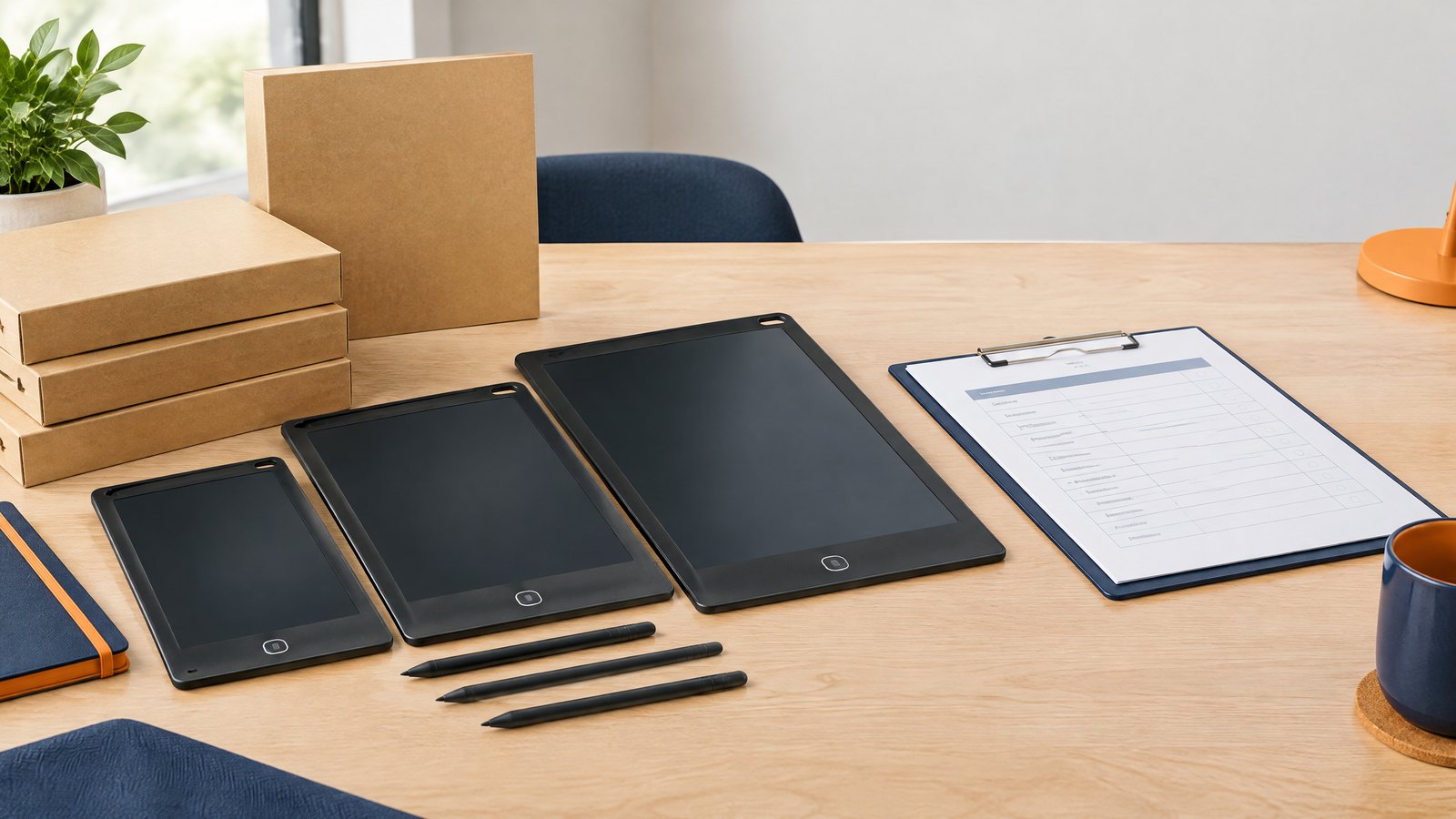
Direct answer: LCD writing tablet MOQ is not one universal number. It can differ by base model, screen option, frame color, logo method, stylus, packaging, printed insert, cards, and carton arrangement. Ask the supplier which component creates each minimum, what is included in the quotation, and whether a stock-platform option can reduce customization complexity for a first order.
Buyers sometimes treat MOQ as a supplier preference. In reality, it often reflects production setup, component ordering, material color, printing, packaging, assembly, and carton efficiency. A standard board in bulk packing may have a different minimum from the same board with custom frame color, printed bezel, custom gift box, localized leaflet, and activity cards.
The goal is not to force every program into a smaller order. It is to make quantity and customization decisions visible before sample approval, artwork release, and production scheduling.
1. Separate base-product MOQ from customization MOQ
Direct answer: Request a quotation that shows the minimum for the base tablet separately from each customization layer. This tells the buyer where a change affects commercial feasibility.
Ask for the minimum associated with:
- base model and screen type;
- frame or bumper color;
- logo print method and position;
- stylus color or marking;
- individual-pack format;
- color box, sleeve, or gift box;
- instruction/manual language;
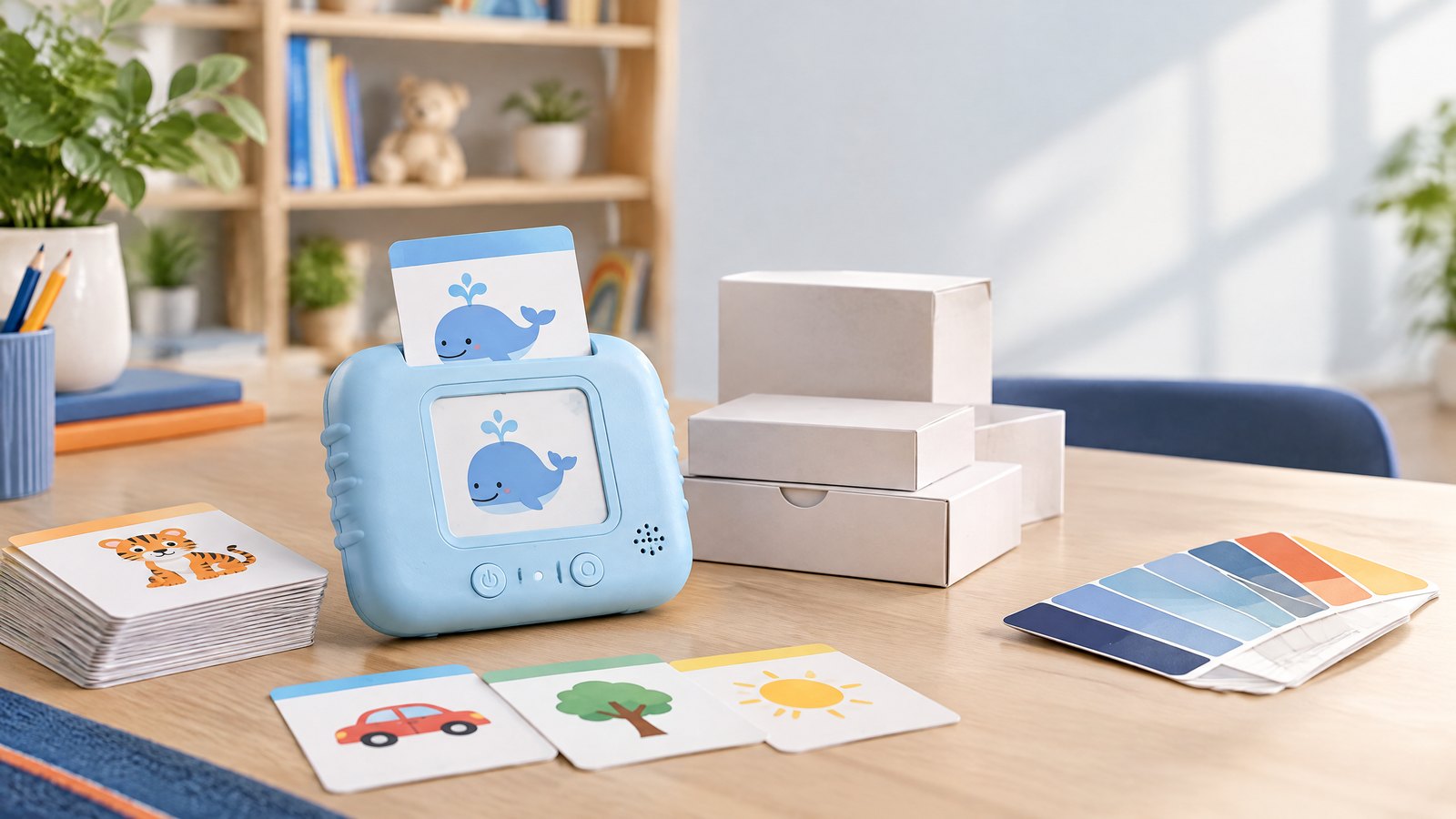
- tracing cards, pouch, stand, or accessory set;
- master-carton configuration;
- market-specific label or barcode version.
If a supplier cannot state the assumptions, the buyer cannot compare offers accurately. The RFQ guide can help make the request specific.
2. Decide which custom elements create real value
A first order does not always need a new housing, several colors, multiple box versions, and a full accessory program. Each change can create another approval, inventory, and reorder responsibility. Prioritize the elements that support the intended product application and sales channel.
For example, a corporate campaign may value a simple frame logo and event insert more than a custom mold. A retail program may need a color box and barcode discipline. A school activity set may need cards and stylus retention. The accessories guide can help evaluate whether an added component belongs in the first SKU.
3. Use a quantity decision table
| Decision | Standard-platform approach | More customized approach |
|---|---|---|
| Product model | Existing approved configuration | Modified screen, frame, or housing direction |
| Branding | Simple mark or stock presentation | Custom print, color, or multiple variants |
| Packaging | Bulk or basic individual pack | Custom box, sleeve, insert, display, or localized version |
| Accessories | Standard stylus | Cards, pouch, stand, spare components, gift set |
| Approval path | Product and basic pack sample | Full production-intent bundle, artwork, and revision control |
| Reorder risk | Fewer variables to control | More variant, stock, and print-version dependencies |
This is not an argument against customization. It is a way to see which changes require a larger or more carefully planned commitment.
Mid-article CTA
Need to plan a first LCD writing tablet order? Send your requirements with model, market, quantity range, logo/colour/packaging needs, accessory list, and target launch. We can help distinguish base-product and customization assumptions before sampling.
4. Build sample approval before committing to volume
MOQ should not remove the need for sample approval. Test the model, screen behavior, stylus, controls, branding, accessories, packaging, labels, and intended product application. A small change that appears low-risk—such as a new color, box insert, or card set—can affect fit, product photos, instructions, carton dimensions, or shipment inspection.
Use a production-intent bundle when the program includes custom packaging or accessories. Record the approved reference, artwork revisions, pack contents, and any open items. The order timeline guide explains how this approval gate connects to production and freight planning.
5. Include quantity in factory testing and shipment inspection planning
The agreed order quantity and SKU mix should be visible in the inspection brief. If cartons contain multiple colors, packs, or accessory versions, state the count and selection method. Factory testing should confirm the selected product functions and assembly; shipment inspection should confirm finished-unit identity, packing, carton data, and the configured order quantity.
Do not assume a carton quantity based on a previous product or nominal screen size. Ask for confirmed individual-pack and master-carton information for the current SKU. This data supports the landed-cost calculation and freight planning.
6. Reorder without losing control
Before a reorder, compare the current quote and product master to the approved initial order. Ask whether any panel, frame material, stylus, print method, accessory, packaging material, carton count, label, or document has changed. If a component changes, decide whether it needs a new sample, content update, market review, or inspection update.
“Same as last order” is not a sufficient specification for a program with multiple variants or artwork revisions. A controlled SKU record makes reorders more predictable.
FAQ
What determines LCD writing tablet MOQ?
MOQ can be affected by the base model, components, colors, printing, packaging, accessories, carton plan, and market-specific versions. Ask which element sets each minimum.
Can I order a standard model with custom packaging?
Often this can be discussed, but packaging may have its own minimum and approval path. Request the base product and packaging assumptions separately.
Does a custom logo change MOQ?
It can, depending on print method, artwork, colour, placement, and production setup. Confirm the details for the exact model and logo plan.
Should I approve a sample before meeting MOQ?
Yes. Sample approval should validate the actual product, pack, accessories, and customer requirements before bulk production is released.
Conclusion
MOQ is a planning input, not just a price question. Separate the base product from custom layers, select the changes that add real user or channel value, approve the complete configured sample, and tie quantity to current pack and inspection data. This gives a buyer a more practical path to an initial order and a controlled reorder.
Final CTA
Ask for an LCD writing tablet MOQ and customization discussion. Include your model, market, quantity range, colors, logo, packaging, accessories, and target timeline.
Turn this sourcing plan into a product brief.
Share your target market, product requirements, packaging preference and estimated volume for a practical OEM / ODM discussion.