This guide provides a practical B2B decision framework. Final specifications, market obligations, testing scope, labels, packaging and shipment requirements must be confirmed for the exact finished SKU and destination.
Introduction
Direct answer: A promotional LCD writing tablet works best when the campaign has a clear recipient task, a useful screen size, an honest product story, visible but restrained branding, and a delivery format that protects the item. Before ordering, approve the actual model, logo treatment, stylus, package, instructions, target-market information, and shipment plan. Do not select a board only because it can carry a logo.
A branded reusable writing board can be a practical event takeaway, welcome-kit item, family activity gift, school-program support item, or meeting giveaway. Its value comes from repeated use: short notes, doodles, reminders, or simple activities. That means the promotional program should make the product easy to understand at first use and useful after the event.
The campaign is stronger when it describes the product plainly. A standard LCD writing tablet is normally a reusable writing surface with a stylus and erase control. It may not store content, connect to an app, or replace a backlit screen. Accurate positioning protects brand credibility.
1. Define the recipient and the giveaway moment
Direct answer: Choose the product format after defining who receives it, where they will use it, how it is handed over, and what message the brand wants to reinforce. A compact event handout, a family activity kit, and an executive desk gift can require different boards and packs.
Start with a short campaign brief:
- recipient profile and expected use;
- event, channel, or delivery moment;
- target market and destination;
- desired product task: note board, drawing activity, travel item, desk reminder, or branded counter tool;
- preferred size and portability;
- logo/brand-message objective;
- quantity, pack format, and required arrival date;
- service or spare-stylus expectation.
Avoid adding features only to make the giveaway look technical. A connected or rechargeable product can add complexity to market preparation, transport, support, and user education. Keep the configuration aligned to the campaign purpose.
2. Choose a format that recipients will actually keep
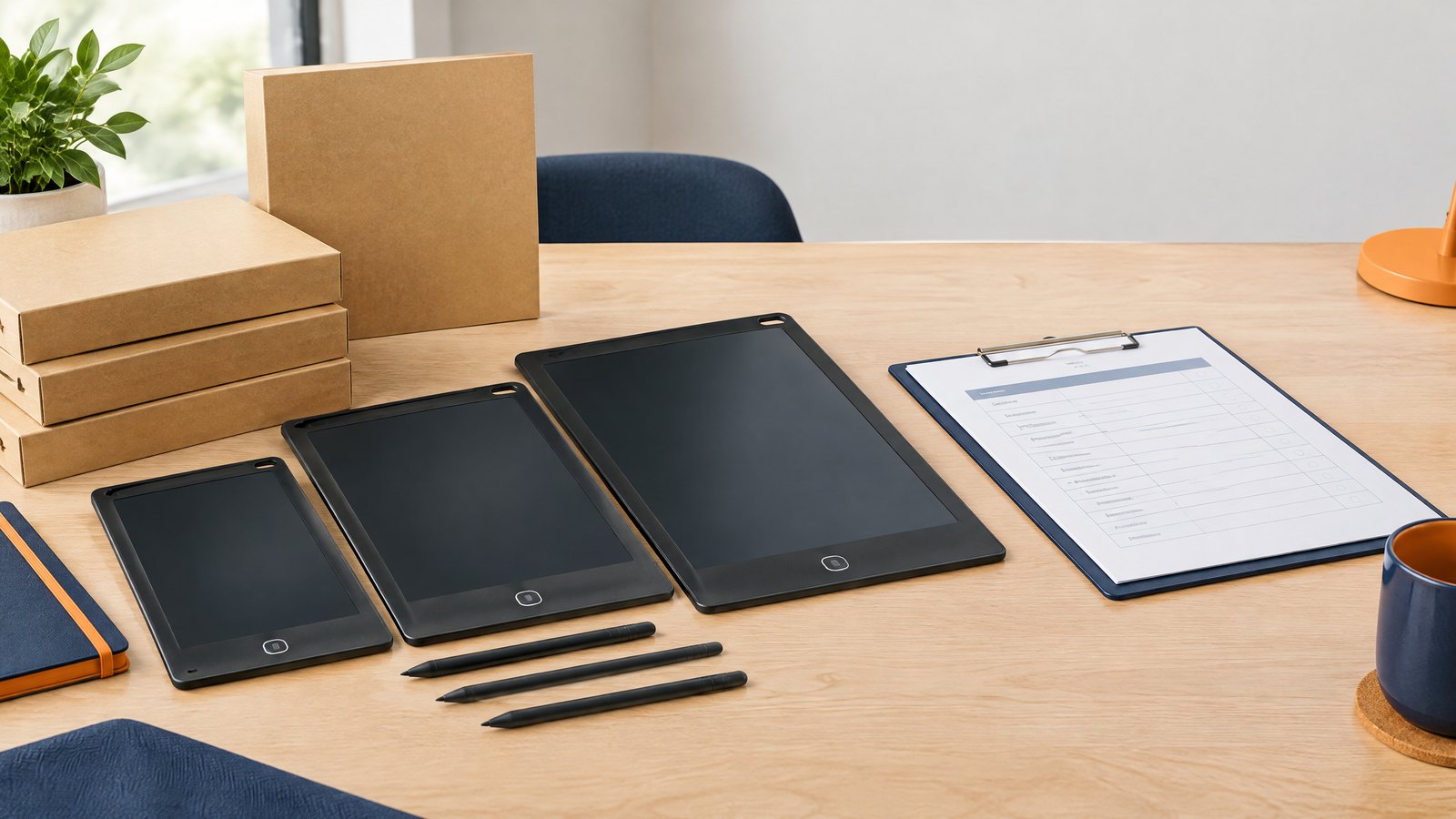
Screen size, active writing area, frame shape, stylus retention, and pack feel matter more than a broad “premium” claim. A compact board can suit a bag, welcome kit, or event handout. A larger board can suit desk use or a family activity gift, but it consumes more carton and storage space.
Use the size selection guide to compare task fit before requesting samples. Then test the actual campaign use: write a short branded message, pack the board into the intended giveaway format, and let a representative user try the stylus and erase control.
For a child-oriented program, do not rely on a playful product photo to establish a market position. Review the intended age statement, product configuration, accessories, instructions, and packaging for the destination market. The CPSC business education page is a useful U.S. starting point, while final requirements depend on the actual product and market.
3. Plan branding for function and readability
Direct answer: Brand the frame, stylus, package, or insert without reducing the usable writing area or confusing product controls. Approve logo location, size, print method, color reference, and artwork revision on a physical sample.
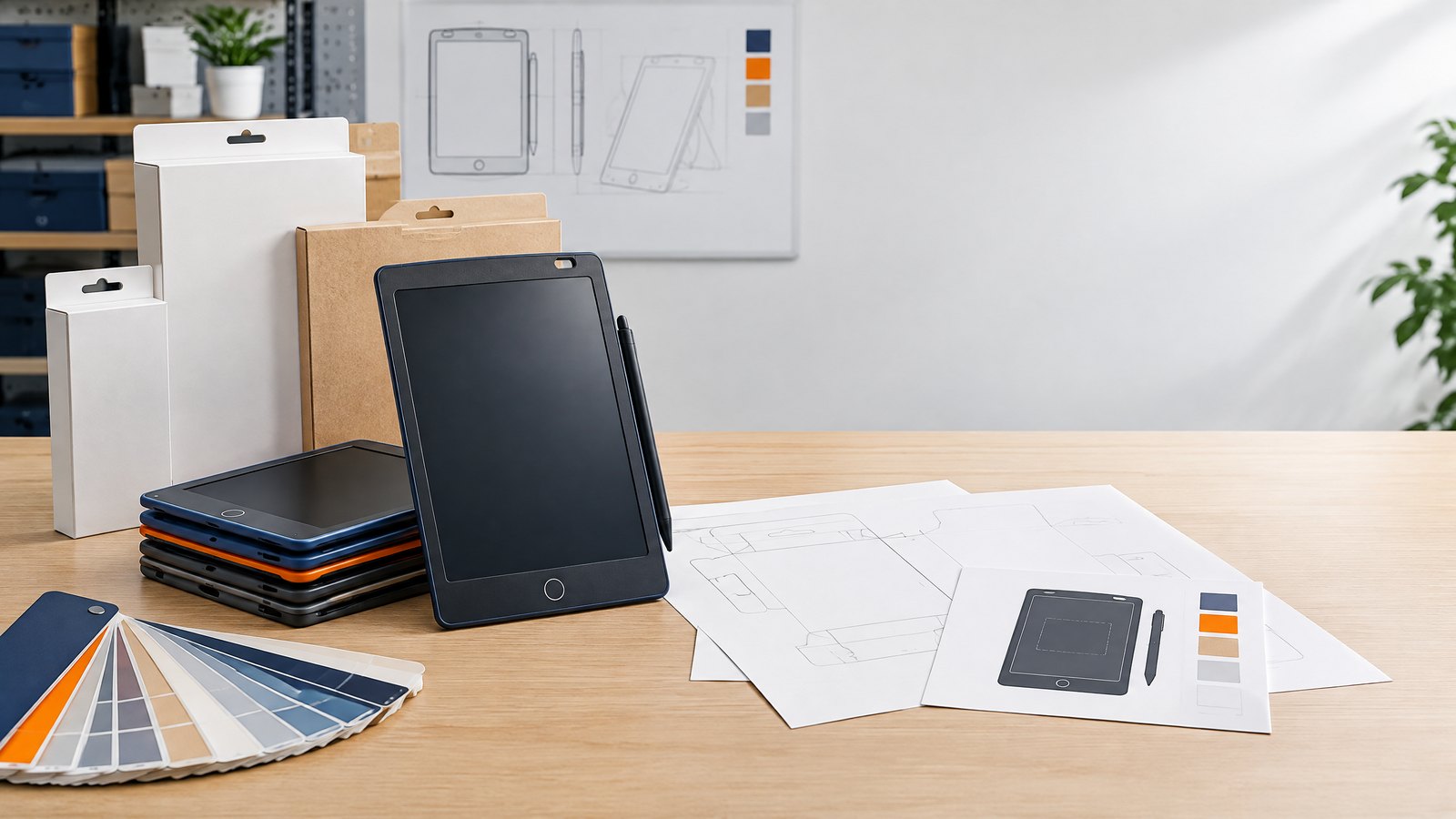
Common branding choices include a small frame logo, printed bezel, custom shell color, stylus marking, gift-card insert, pouch print, color box, or campaign sleeve. The right choice depends on where the recipient sees the brand after the event. A small logo on the frame may be enough for daily use; a campaign message can live on the pack or insert rather than crowding the writing surface.
Check logo placement around erase and lock controls. Test how it looks when the product is held, placed on a desk, or photographed. A brand mark should not make the operating instructions harder to understand.
Mid-article CTA
Planning a corporate gift or promotional program? Send your requirements with recipient use, market, quantity, preferred screen size, branding scope, pack format, and target delivery date. We can help prepare a campaign-ready sample brief.
4. Build the pack around the hand-off experience
The retail or giveaway pack should protect the board and explain the first use. Decide whether the product is handed out loose, in a polybag, pouch, white box, color box, gift box, mailer, or corporate welcome kit. The pack should list the actual contents and present the selected model accurately.
For a premium hand-off, a simple insert can show: write with the stylus, check the lock before erase, store the stylus, and contact support if needed. Do not promise a specific erase count, lifetime, environmental benefit, or durability level unless the exact claim has been substantiated for the selected product.
If the campaign makes environmental claims, keep them specific and supportable. The UK Green Claims Code offers clear principles for avoiding vague or misleading marketing. “Reusable writing surface” may be accurate; a universal “eco-friendly gift” claim may not be.
5. Sample approval and campaign testing
Approve a full production-intent gift set, not a tablet-only sample. Check the screen appearance, writing and erase response, lock function, stylus, logo, pack, insert, label, and any pouch or accessory. Put the item through the intended hand-off: place it in the welcome kit, event bag, or parcel. Confirm it fits, is protected, and tells the recipient what to do.
Record approved photos, artwork revisions, pack contents, and any open points. This approved reference should guide factory testing and shipment inspection. The private-label product-line guide explains why controlled changes on a standard platform are often easier to manage than changing several elements at once.
6. Factory testing, inspection, and delivery planning
Factory testing should cover the campaign-relevant details: product function, erase/lock response, logo position, stylus retention, accessory count, insert/card revision, package assembly, and carton labels. During shipment inspection, compare finished products and selected cartons with the approved full-set reference. Check quantity, appearance, function, packaging, carton condition, and shipping marks.
For an event deadline, book inspection and freight planning with enough time to respond to an issue. Confirm packing data from the finished SKU—individual-pack dimensions, cartons, gross weight, units per carton, and cargo-ready date. Do not calculate delivery only from a product photo or nominal screen size.
7. Keep post-event support simple
A corporate gift can still generate support questions. Prepare a basic contact route and first-use FAQ. Explain what the lock does, what is included, how to store the stylus, and the approved support path for a missing or damaged item. If the order includes spare styluses or pouches, identify them by model. Our after-sales guide covers service planning in more detail.
FAQ
Is an LCD writing tablet a good corporate giveaway?
It can be useful when the recipient has a clear use for a reusable note or drawing surface and the board is presented accurately. Test the selected size, branding, pack, and first-use experience before volume purchasing.
Where should a logo be placed on an LCD writing tablet?
A frame or bezel location often works when it does not reduce writing space or obscure controls. Approve the position, print method, color, and appearance on the physical sample.
Can I add a custom gift box?
Many programs can use customized packaging, but it should be sampled with the final tablet and accessories. Confirm pack dimensions, protection, labels, carton data, and marketplace/event needs.
What should be tested before a promotional order ships?
Test product function, erase/lock operation, logo, stylus, accessories, packaging, inserts, labels, carton count, and carton condition against the approved campaign sample.
How do I avoid misleading sustainability claims?
Use specific, factual language about the product’s reusable writing function and avoid broad environmental claims unless they are supported for the selected product and market.
Conclusion
A promotional LCD writing tablet should earn its place in a campaign through practical use, not just logo space. Define the recipient task, select a realistic format, approve branding and packaging as a complete set, carry customer requirements into factory testing and shipment inspection, and create simple first-use support. The result is a more credible giveaway and a more controlled procurement program.
Final CTA
Request a quotation for a branded LCD writing tablet program. Include recipient profile, campaign use, market, quantity, size, logo/pack direction, and required arrival window.
Turn this sourcing plan into a product brief.
Share your target market, product requirements, packaging preference and estimated volume for a practical OEM / ODM discussion.